Book 40: Son by Lois Lowry
The final installment in The Giver saga. I have to say this is my favorite of the last three. It was very well written and engaging. I can't say much about the plot because I wouldn't have wanted to know anything before I read it, so I will only give you bare bones. The story focuses on a girl named Claire, who is a contemporary of Jonas in the setting of The Giver. The book is divided into three parts. The first part is set in the community Jonas and Claire spent part of their childhood in. The second part is in an entirely new community. And the third part returns us to the setting of the community that was introduced in Messenger. There are a few inconsistencies in this book (meaning details given that differ from details given in one or more of the preceding books), which I noted but was not extremely bothered by. All in all, nicely done, Lois. I highly recommend this book and give it four stars. Also, after reading this one, I am kind of tempted to reduce my rating of the other three books to 3.5 or 3 stars. This one was just that much better, in my opinion.
Book 41: Girl in Translation by Jean Kwok
Let me just say that I forgot, repeatedly, that this was not a memoir. After I read the blurb about Jean Kwok on the back of the book, including that she immigrated to the US, lived in Brooklyn, worked in a sweatshop, etc., I somehow decided that she had decided to write her own story. So, it reads like a memoir or autobio, in other words, but is, in fact, a novel. I liked the writing style, but...
it was also a double edged sword for me. See, I was fascinated by Kimberly's stories. And I'm sure quite a few of them were taken from Jean's own childhood/adolescence. But I want to know what was true and what was made up for the book. I am kind of driven crazy by not knowing.
I give this book three stars. I really liked it and was able to finish it pretty quickly. I was disappointed with how Kwok chose to wrap up the story in the epilogue. The choices the protagonist made there seemed very out of character and kind of put a bad taste in my mouth. But all in all, it was a very enjoyable read. I'd especially recommend it to readers who enjoy the stories of immigrants and/or foreigners experiencing America for the first time.
Book 42: re-read of Harry Potter and the Goblet of Fire
Loved it. What can I say? I am a huge HP nerd. I have never loved a YA series as much as I love this one, and I don't think it's premature to say I never will. This book is the start of the giant installments. Books 1-3 are seriously puny compared to books 4-7. This book is also where it really starts to get emotional for me. Seeing Cedric die, watching Voldemort return, noticing the beginning of the tension between Hermione and Ron, Harry giving his bag of 1,000 galleons to Fred and George... man, it gets me every time. :) 5 stars.
Showing posts with label three stars. Show all posts
Showing posts with label three stars. Show all posts
Tuesday, November 6, 2012

Thursday, November 1, 2012
Ellie's books 14-17
So. In the interest of catching up (really this time), I'm just going to post a few thumbnail-type reviews.
14. The Moonspinners, by Mary Stewart
****
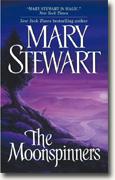
I love this book, and re-read it every year around Easter time (yes, that's how far behind I am with my reviews) and then spend the next few months dreaming of Mediterranean holidays. This book chronicles the adventures of Nicola Ferris, a secretary at the British embassy in Athens, who takes an Easter holiday with her cousin in an out-of-the-way village in Crete. She promptly stumbles into a mystery involving a pair of brothers, kidnapping, thievery, boats, crab-pots and both attempted and accomplished murder. The action is great, but what I love best about this book is the feeling of place that the descriptions evoke. I can easily picture myself into the landscape and always come out of the book slightly bewildered and disappointed that I'm no longer sitting on a patio in the Greek sunshine sipping mint drinks. Four stars.
15. How We Decide, by Jonah Lehrer
***

This was another Kindle Daily Deal which I picked up on a whim because I thought, looking at the title, that it might help me with some of my less-decisive tendencies. In fact, in the author's note on this book, he explains that he decided to write it because he was tired of spending fifteen minutes in the cereal aisle trying to decide between Apple Cinnamon and Honey Nut Cheerios every time he went grocery shopping. However, this book isn't a how-to guide like you might expect, but more of a how-do guide to the brain and its inner workings. Lehrer opens each chapter with a fascinating story of a real-life situation in which a type of decision was made (such as the Mann Gulch fire, which Megan talked about in her review of Young Men and Fire), and then talks about what parts of the brain and which brain functions influenced, prevented, or made such a decision possible. Most of the time it was fascinating, although sometimes I admit I got bogged down in the super-scientific parts. But if you are interested in the ways the brain works and affects such things as panic, intuition, gambling, autism, serial killers, memory, addiction, etc., then you'll enjoy this book. The writing style is clear and coherent so that even the super-technical parts are understandable, and the storytelling parts are, quite simply, riveting. Unfortunately, though, it didn't help with my cereal selection process. Three stars.
16. Bridget Jones' Diary, by Helen Fielding
***

It had been several years since I'd read this, and flying out of my home state and hometown to move to a new city across the country called for something light-hearted. My Kindle offered me this. And it did what it needed to, in that I was distracted and diverted, but I was a bit disappointed to find out that I didn't enjoy it quite as much as the first time I'd read it. Maybe it's that I've gotten older and don't have the patience for as much juvenile-type behavior as Bridget engages in. I don't know. Despite my impatience with some of her antics, though, Bridget did manage to get in a few great lines, for which I must give her (and Fielding) due credit. My favorite lines this time around (in no particular order):
On the end of a relationship:
It's no good. When someone leaves you, apart from missing them, apart from the fact that the whole little world you've created together collapses, and that everything you see or do reminds you of them, the worst is the thought that they tried you out and, in the end, the whole sum of parts adds up to you got stamped REJECT by the one you love. How can you not be left with the personal confidence of a passed-over British Rail sandwich?
On trying to set the VCR record function:
Feel exactly the same as feel when trying to follow signposts on roads. Know in heart that signposts and video manual do not make sense but still cannot believe authorities would be so cruel as to deliberately dupe us all. Feel incompetent fool and as if everyone else in world understands something which is being kept from me.
And of, course, the classic:
It struck me as pretty ridiculous to be called Mr Darcy and to stand on your own looking snooty at a party. It's like being called Heathcliff and insisting on spending the entire evening in the garden, shouting "Cathy" and banging your head against a tree.
All in all, a fun read. Three stars.
17. The 39 Steps, by John Buchan
****

In the interest of full disclosure, I "read" this in audiobook format, which I still think totally counts, while pushing a napping toddler around the apartment complex. This book follows expatriate Scot Richard Hannay, who has recently returned to London from southern Africa and is about to die of boredom. He has determined to leave the country again when he is approached by a stranger claiming to hold information vital to the security of the nation, and who pleads for Hannay's assistance in hiding him until he can contact the proper people. Hannay puts him up for the night but ignores the wilder flights of his guest's tales of political plotting. However, when his guest is murdered, leaving Hannay his notebook, Hannay finds that he must not only believe the wild tales of his guest, but must also dodge both the British police (who suspect him of being the murderer) and a formidable force of foreign spies bent on silencing Hannay before he can thwart their nefarious plans.
Bottom line: great book. Lots of action, lots of intrigue, lots of close calls and lots of fun. I'd seen several film adaptations of this story so was excited to get the chance to discover the original. I think the original is of course the best, but was surprised by just how many universal elements from the adaptations were missing from the original book. For example, I kept waiting and waiting for the beautiful woman to appear so they would be forced to run across Scotland handcuffed together and outwitting dangerous spies and . . . nothing. No woman at all other than one or two throwaway characters like farmers' wives and the like.
I was pleased to find, however, that the resourcefulness, daring and general awesomeness that characterize the Richard Hannay of the adaptations were all there and more. Definitely a character you enjoy spending time with, and certainly one you'd want to have on your side in a pinch. Four stars.
I loved the version I listened to (done by BJ Harrison of The Classic Tales Podcast). I highly recommend checking out his podcasts and audiobooks if you haven't yet done so.
Wednesday, September 26, 2012
34: Something Missing
Something Missing
by Matthew Dicks
3 stars
This is a charming book and a very quick read. It was picked for my Relief Society's book club for October, and I read it in just the past few days.
The main character is a neurotic thief named Martin. He is a career criminal, but not what he likes to call a 'smash and grabber.' Instead, Martin's OCD tendencies and savant-like genius help him bring an incredible sense of order to his life's work: stealing items from his "clients" that they will never notice have gone missing.
Martin's client list has been the same for years, though it does grow on occasion. He vets his clients thoroughly, only selecting married couples who either have no children or are empty-nesters. Not too wealthy, certainly not poor. He scopes out potential clients until he knows enough about them and their schedule to make an educated decision about whether they should become part of his list. Once a client has been accepted, Martin visits regularly, inventorying their pantries and cupboards, their medicine cabinets and jewelry boxes-- after gaining entry to their homes via spare keys that he has made, of course.
Following a strict and detailed set of rules, Martin spends no more than 15 minutes in a client's home. He never speaks inside a house, just in case a recording device is on (either accidentally or purposefully). He is meticulous about wearing latex gloves, a hairnet, and plastic moccasins over his shoes, and he never carries any identifying information that could accidentally be left in a house. He never visits the same client twice in one day.
Once he knows a client well enough to determine which item will never be missed, he begins his pilfering. Martin takes anything from cans of tomato paste, to half a bottle of laundry detergent, to a book of stamps, to crystal vases and diamond earrings. His system is so well thought out that he has never been caught, and probably never even suspected. He makes sure to only take items that will either go unnoticed or the absence of which will be attributed to absentmindedness or a spouse. He is brilliant at what he does.
Until the day he breaks some of his rules. Martin has been visiting these clients for so long that he feels he knows them. He has grown a strange sort of affection for most of them. And when a situation arises in which he thinks he can help one of them, he knows he must do so. This sets off a chain of events that Martin certainly never predicted and is not prepared for. As the back cover says, "Something Missing is a hilarious, gripping, and often profound novel about a man used to planning every second of his life who is suddenly forced to confront chaos and spontaneity."
I really liked this book. It was engaging, and I wanted to know what would happen next. Some of the detail in the writing was a little tedious, but I think the author meant to give the reader a look into Martin's OCD, and just how meticulous and repetitive a lifestyle like that can be. I grew to like Martin, even though at first he kind of grated on me. If you need a quick and enjoyable read, pick this one up.
by Matthew Dicks
3 stars
This is a charming book and a very quick read. It was picked for my Relief Society's book club for October, and I read it in just the past few days.
The main character is a neurotic thief named Martin. He is a career criminal, but not what he likes to call a 'smash and grabber.' Instead, Martin's OCD tendencies and savant-like genius help him bring an incredible sense of order to his life's work: stealing items from his "clients" that they will never notice have gone missing.
Martin's client list has been the same for years, though it does grow on occasion. He vets his clients thoroughly, only selecting married couples who either have no children or are empty-nesters. Not too wealthy, certainly not poor. He scopes out potential clients until he knows enough about them and their schedule to make an educated decision about whether they should become part of his list. Once a client has been accepted, Martin visits regularly, inventorying their pantries and cupboards, their medicine cabinets and jewelry boxes-- after gaining entry to their homes via spare keys that he has made, of course.
Following a strict and detailed set of rules, Martin spends no more than 15 minutes in a client's home. He never speaks inside a house, just in case a recording device is on (either accidentally or purposefully). He is meticulous about wearing latex gloves, a hairnet, and plastic moccasins over his shoes, and he never carries any identifying information that could accidentally be left in a house. He never visits the same client twice in one day.
Once he knows a client well enough to determine which item will never be missed, he begins his pilfering. Martin takes anything from cans of tomato paste, to half a bottle of laundry detergent, to a book of stamps, to crystal vases and diamond earrings. His system is so well thought out that he has never been caught, and probably never even suspected. He makes sure to only take items that will either go unnoticed or the absence of which will be attributed to absentmindedness or a spouse. He is brilliant at what he does.
Until the day he breaks some of his rules. Martin has been visiting these clients for so long that he feels he knows them. He has grown a strange sort of affection for most of them. And when a situation arises in which he thinks he can help one of them, he knows he must do so. This sets off a chain of events that Martin certainly never predicted and is not prepared for. As the back cover says, "Something Missing is a hilarious, gripping, and often profound novel about a man used to planning every second of his life who is suddenly forced to confront chaos and spontaneity."
I really liked this book. It was engaging, and I wanted to know what would happen next. Some of the detail in the writing was a little tedious, but I think the author meant to give the reader a look into Martin's OCD, and just how meticulous and repetitive a lifestyle like that can be. I grew to like Martin, even though at first he kind of grated on me. If you need a quick and enjoyable read, pick this one up.
Monday, September 17, 2012
32: Young Men and Fire
Young Men and Fire
Norman Maclean
3 stars
If you aren't familiar with Norman Maclean, he is the author of A River Runs Through It, which you are more likely to be familiar with-- at least the movie version. I've read some of Maclean's other work, and this non-fiction book has been on my to-read list for years. I'm glad I finally checked it out, though it wasn't quite what I was expecting.
In 1949, a crew of 15 Forest Service smokejumpers descended on what they thought would be a routine fire-fighting operation in Mann Gulch, a remote location in the Montana wilderness. Two hours later, all but three of these men were dead. The real story of what happened in that gulch is what Maclean sought out to discover and record for posterity. On the surface, this book delves deeply into fire theories and wind speed and all sorts of things I would never have learned about had I not read this book-- but on a deeper level, this book is about life, and dying, and youth, and old age, and humanity. That may sound like a cliche, but it's true. Maclean wove quite a bit into his telling of this tale.
From a Goodreads summary:
I noted in my Goodreads review of this book that I have come to the conclusion that Maclean's writing is an acquired taste. Some of it I don't connect with-- he uses a lot of imagery that doesn't resound with me. But he also, every now and then, busts out a gem that leaves me thinking. And so I keep coming back for more. This book, I'll admit, was kind of slow at times. There is one pretty technical section that I nearly didn't get through, just because I'm not that into the science side of fires. I was fascinated with the human side of the story, though, and that kept me going. I'm glad I finished it. It gets a solid three stars from me.
I'll leave you with one of my favorite parts, found at the end.
"I, an old man, have written this fire report. Among other things, it was important to me, as an exercise for old age, to enlarge my knowledge and spirit so I could accompany young men whose lives I might have lived on their way to death. I have climbed where they climbed, and in my time I have fought fire and inquired into its nature. In addition, I have lived to get a better understanding of myself and those close to me, many of them now dead. Perhaps it is not odd, at the end of this tragedy where nothing much was left of the elite who came from the sky but courage struggling for oxygen, that I have often found myself thinking of my wife on her brave and lonely way to death."
Norman Maclean
3 stars
If you aren't familiar with Norman Maclean, he is the author of A River Runs Through It, which you are more likely to be familiar with-- at least the movie version. I've read some of Maclean's other work, and this non-fiction book has been on my to-read list for years. I'm glad I finally checked it out, though it wasn't quite what I was expecting.
In 1949, a crew of 15 Forest Service smokejumpers descended on what they thought would be a routine fire-fighting operation in Mann Gulch, a remote location in the Montana wilderness. Two hours later, all but three of these men were dead. The real story of what happened in that gulch is what Maclean sought out to discover and record for posterity. On the surface, this book delves deeply into fire theories and wind speed and all sorts of things I would never have learned about had I not read this book-- but on a deeper level, this book is about life, and dying, and youth, and old age, and humanity. That may sound like a cliche, but it's true. Maclean wove quite a bit into his telling of this tale.
From a Goodreads summary:
These first deaths among the Forest Service's elite firefighters prompted widespread examination of federal fire policy, of the field of fire science, and of the frailty of young men. For Maclean, who witnessed the fire from the ground in August of 1949, and even then he knew he would one day become a part of its story, it is a story of Montana, of the ways of wildfires, firefighters, and fire scientists, and especially of a crew, young and proud, who "hadn't learned to count the odds and to sense they might owe the universe a tragedy." This tale is also Maclean's own, the story of a writer obsessed by a strange and human horror, unable to let the truth die with these young men, searching for the last - and lasting - word. A canvas on which to tell many stories, including the story of his research into the story itself. And finally Nature's violence colliding with human fallibility. Haunted by these deaths for forty years, Norman Maclean returned to the scene with two of the survivors and pursues the mysteries that Mann Gulch has kept hidden since 1949. From the words of witnesses, the evidence of history, and the research of fire scientists, Maclean at last assembles the scattered pieces of the Mann Gulch tragedy; in his last work that consumed 14 years of his life, and earned a 1992 National Book Critics Circle Award. The excruciating detail of this book makes for a sobering reading experience. Maclean -- a former University of Chicago English professor and avid fisherman -- also wrote A River Runs Through It and Other Stories , which is set along the Missouri River, one gulch downstream from Mann Gulch.One of the most fascinating parts of the Mann Gulch story is a controversial decision made by the crew foreman when it became clear to him that he and most of his crew would not be able to make it to the top of the ridge ahead of the quickly spreading fire. He decided to light what is now known as an escape fire ahead of the fire coming up behind them, and lie down in the hot ashes to let the other fire pass over. He tried to get his crew to enter his escape fire, but in the chaos and fear, not a single one of them listened to him. As a result, all the rest of the crew (save two who had made it to the top of the ridge ahead of everyone) perished. While escape fires are now recognized as a legitimate means to escape death in such situations, at the time of the Mann Gulch fire they were not. The foreman acted on instinct alone. How differently things could have turned out if his crew had followed his orders.
I noted in my Goodreads review of this book that I have come to the conclusion that Maclean's writing is an acquired taste. Some of it I don't connect with-- he uses a lot of imagery that doesn't resound with me. But he also, every now and then, busts out a gem that leaves me thinking. And so I keep coming back for more. This book, I'll admit, was kind of slow at times. There is one pretty technical section that I nearly didn't get through, just because I'm not that into the science side of fires. I was fascinated with the human side of the story, though, and that kept me going. I'm glad I finished it. It gets a solid three stars from me.
I'll leave you with one of my favorite parts, found at the end.
"I, an old man, have written this fire report. Among other things, it was important to me, as an exercise for old age, to enlarge my knowledge and spirit so I could accompany young men whose lives I might have lived on their way to death. I have climbed where they climbed, and in my time I have fought fire and inquired into its nature. In addition, I have lived to get a better understanding of myself and those close to me, many of them now dead. Perhaps it is not odd, at the end of this tragedy where nothing much was left of the elite who came from the sky but courage struggling for oxygen, that I have often found myself thinking of my wife on her brave and lonely way to death."
Sunday, July 22, 2012
Ellie's Book #13: The Black Tulip
The Black Tulip by Alexandre Dumas, père
***

I love the idea of gardening but I am an irredeemable plant-killer.
I can back up this assertion.
Ninth-grade biology was traumatizing in many ways (anyone else who took Mr. Ekberg’s class can attest to this), but one of the assignments I actually was looking forward to was the project for the asexual reproduction unit. We had to grow and tend an asexually-reproducing plant and keep it alive until it reproduced asexually (yes, I am deriving a disproportionate amount of amusement from typing “asexual” so many times. In some ways I might still be in ninth grade).
“If you’re not so great with plants,” Mr. Ekberg told us, “try a bryophyllum. They’re pretty much impossible to kill.” My ears perked up. My previous biology project—growing a flower from a seed—had failed spectacularly. Come to think of it, all my elementary school and primary class bean sprouts had met similarly sad fates. Bryophyllum sounded right up my alley.
For those of you who don’t know what a bryophyllum is, it looks a-like this:

Cute, right? All those little flowers on the edges are the asexually-reproduced new plants.
I marched up to Mr. Ekberg’s desk with the other students to get my bryophyllum starter. I cradled it carefully all the way home. This was going to be my first real, successful plant, I just knew it. I’d keep it alive until it reproduced and get an A on my assignment but then I’d also keep it alive FOREVER. This plant was going to come to college with me, just you wait and see. Hadn’t the teacher said they were impossible to kill? Yes. Yes, he had. He had even gone further: “If you can manage to kill a bryophyllum, you should probably just give up on plants altogether.”
Well, I did get an A on my assignment. Two days later the bryophyllum went from beautiful, A-grade flowering to brown, dry, dead practically overnight.
I pretty much gave up on plants altogether. Except in books. Because, as we know, the plants in books cannot die merely from being in my presence. (They may not have taught you that in biology, but I am here to share important tidbits like that.) This is part of the reason why I like books which feature gardens or plants or growing things.
So I was excited for this book. It was another book club read. Kristen already described it (aptly) as a horticultural thriller. It follows the efforts of a tulip breeder, Cornelius, to create a perfect black tulip and win the national prize. He must battle his neighbor’s jealous efforts to thwart Cornelius and steal the prize for his own. He must deal with false imprisonment. He must learn to balance his love of tulips with his love of Rosa, the prisonkeeper’s daughter. And he must not get too entangled in political drama. Can he do it? Will his fortunes and love affairs flower like a prize black tulip or wither like my ninth-grade bryophyllum? Will the reader accidentally learn some history on the way? Will good times be had by all?
This book moved much more quickly than the other Dumas works I’ve read, but felt slightly less richly developed. It was still an enjoyable read and I recommend it to anyone else who, like me, dreams of the flowers they cannot grow. Or, you know, who just likes a good horticultural thriller. Three stars.
Sunday, July 15, 2012
Before Green Gables
Before Green Gables, by Budge Wilson, is a prequel to the Anne of Green Gables series. This book begins with Anne's parents. Bertha and Walter Shirley are happy newlyweds with a relationship so ideal that it depresses the neighbors. Their wonderful life becomes more wonderful still when their daughter Anne is born. Unfortunately, the Shirley's seem to have used up a lifetime's supply of good fortune, because within three months they have both died of a fever and left their precious daughter to the kindness of strangers. Most of Anne's time in this novel is spent with the Thomas family. She cares for their children, barely younger than herself, and tries to reason out the motives behind Mr. Thomas' alcoholism and domestic abuse. Luckily, she finds silver linings that help to develop that notorious Anne Shirley optimism and imagination when she begins attending school and meeting a different set of people. Anne's life seems to revolve around one disaster after another and she is forced to move from home to home, including a brief stint in an orphanage. The resolution, of course, comes when Anne makes the trip to Prince Edward Island to what she knows will finally be home.
This book was a fun read, and I think anyone who likes Anne of Green Gables would agree. But... some things in the story are a bit much. Like, that Anne, at age three, is as verbose as she is when she arrives at Green Gables. (Although, I will admit that by the end of the book she really does seem to have grown into the character you see in Anne of Green Gables.) Or, that her parents' relationship was so sweet and sincere that their neighbor just couldn't bear to be around them both because her own life was so sad. Of course Anne has a dramatic flair, but these weren't part of that. There were definitely some eye roll moments for me.
One aspect that I really enjoyed about the book, though, was seeing how Anne, who has had such a sad life, develops her enthusiastic personality. Most of the positive experiences Anne has as a child revolve around stories, learning, and developing her imagination. I really enjoyed the romance of the Word Man and her teacher.
I'd give this book three stars. It's a fun read if you already love Anne, but I wouldn't recommend starting here.
This book was a fun read, and I think anyone who likes Anne of Green Gables would agree. But... some things in the story are a bit much. Like, that Anne, at age three, is as verbose as she is when she arrives at Green Gables. (Although, I will admit that by the end of the book she really does seem to have grown into the character you see in Anne of Green Gables.) Or, that her parents' relationship was so sweet and sincere that their neighbor just couldn't bear to be around them both because her own life was so sad. Of course Anne has a dramatic flair, but these weren't part of that. There were definitely some eye roll moments for me.
One aspect that I really enjoyed about the book, though, was seeing how Anne, who has had such a sad life, develops her enthusiastic personality. Most of the positive experiences Anne has as a child revolve around stories, learning, and developing her imagination. I really enjoyed the romance of the Word Man and her teacher.
I'd give this book three stars. It's a fun read if you already love Anne, but I wouldn't recommend starting here.
Wednesday, June 27, 2012
Bleed for Me
Book #26
Three Stars
I delved into a genre that I normally don't pay much attention to: the crime/detective/murder mystery sort. These seem to be a dime a dozen. There are so many authors who pump these books out like it's nothing. Maybe that's why I've never been really drawn in. I don't know. But somewhere along the way, this book was recommended and I decided to give it a shot.
The author is Michael Robotham. He has been an investigative journalist in Britain, Australia, and the US. He created a character named Joseph O'Loughlin, a psychiatrist who sometimes helps the police out, and who has gotten himself and his family into more than one close call because of this. I didn't know this before I read it, but Bleed for Me is actually the fourth (I think) Joe O'Loughlin novel. I added the others to my to-read list so that I will have the info easily accessible, but I haven't decided yet whether I will read them.
I think Robotham is a good writer. He kept me engaged. He knows how to twist a plot. This particular plot goes a little something like this:
If you are into this genre, pick this one up and you won't be disappointed. I think I would have given it at least four stars if this were my cup of tea. As it's not, I will go with three stars.
Three Stars
I delved into a genre that I normally don't pay much attention to: the crime/detective/murder mystery sort. These seem to be a dime a dozen. There are so many authors who pump these books out like it's nothing. Maybe that's why I've never been really drawn in. I don't know. But somewhere along the way, this book was recommended and I decided to give it a shot.
The author is Michael Robotham. He has been an investigative journalist in Britain, Australia, and the US. He created a character named Joseph O'Loughlin, a psychiatrist who sometimes helps the police out, and who has gotten himself and his family into more than one close call because of this. I didn't know this before I read it, but Bleed for Me is actually the fourth (I think) Joe O'Loughlin novel. I added the others to my to-read list so that I will have the info easily accessible, but I haven't decided yet whether I will read them.
I think Robotham is a good writer. He kept me engaged. He knows how to twist a plot. This particular plot goes a little something like this:
A teenage girl-- Sienna, a troubled friend of his daughter-- comes to Joe O'Loughlin's door one night. She is terrorized, incoherent-- and covered in blood.
The police find Sienna's father, a celebrated former cop, murdered in the home he shared with Sienna. Tests confirm that it's his blood on the girl. She says she remembers nothing.
Joe O'Loughlin is a psychologist with troubles of his own. His marriage is coming to an end and his daughter will barely speak to him. He tries to help Sienna, hoping that if he succeeds, he will win back his daughter's affection. But Sienna is unreachable, unable to mourn her father's death or to explain it.
Investigators take aim at Sienna. O'Loughlin senses something different is happening, something subterranean and terrifying, to Sienna. It may be something in her mind. Or it may be something real. Someone real. Someone capable of the most grim and gruesome murder, and willing to kill again if anyone gets too close.I won't lie, the plot gets gritty at times. It deals with some unpleasant characters and some even more unpleasant goings-on. But I think that is the way of things with this genre. I will say that insofar as Robotham deals with some pretty sensitive topics, he does so very tastefully. He could have filled the book with a lot of gory and lascivious details-- had plenty of opportunities to-- and he didn't. I was grateful for that. As far as content, I think there was one brief sex scene and a smattering of swear words. I didn't feel like anything in the book was gratuitous.
If you are into this genre, pick this one up and you won't be disappointed. I think I would have given it at least four stars if this were my cup of tea. As it's not, I will go with three stars.
Sunday, June 17, 2012
And the 24th spot goes to...
The Autobiography of Mrs. Tom Thumb: A Novel
Melanie Benjamin
3 stars
I wanted to love this book. I really did. It came highly recommended. It is about a fascinating person from American history. I thought, why not? And, after reading it, I am willing to bet that most, if not all, of you would like this book a lot if you gave it a chance.
But I found out something about myself as I read this book. Something that I am glad I learned and that forces me to give this book three stars instead of four. That something is that I don't like a fictionalized "autobiography" of a real person.
Mercy Lavinia Warren Bump Stratton Magri, aka Vinnie, was born October 31, 1841, in Middleborough, MA. Fully grown, Vinnie stood 2'8". She had what was then known as proportionate dwarfism. In other words, she looked like a perfectly formed adult female but was just extremely small. This turned out to be quite the lucky break, because proportionate dwarfs were looked upon with curiosity instead of disgust and/or revulsion. For this reason, she was able to have quite a successful life in show business, whereas those with disproportionate dwarfism were typically relegated to the side show and clown acts.

Not a whole lot is known about Vinnie's life, mainly the bare bones. She wrote a few chapters in an attempt at an autobiography, but she was not very detailed or open about her feelings and experiences. The author of this novel did do a lot of research and probably found out all she could about Vinnie, and then filled in the gaps with her own creative ideas.
What results is actually a good story. It was a good idea, and Benjamin did a good job with what she set out to do. I think she's a marvelous writer. She created a great personality for Vinnie-- it was a believable narrator throughout.
But it kind of drove me crazy, page after page, that I was reading a novel instead of a non-fiction autobiography. I just wanted to know what REALLY happened. I like learning about people and things. I love a good autobiography-- well-written and engaging. And thus I discovered that I don't like this genre.
So much of Vinnie's life is fascinating to me. Although she was sheltered in her youth, she became a school teacher at a young age. Feeling the itch to travel, she left home and worked on a showboat for about three years before going under contract with P.T. Barnum. Barnum, as you may know, was single-handedly responsible for the fame of Charles Stratton, aka General Tom Thumb, and many believe that it was Barnum who orchestrated the wedding that eventually took place between Vinnie and Charles. The Stratton wedding was the long-ago version of last year's Royal Wedding. Yes, it was that big. It took place during the Civil War and even took top billing in the newspapers for a few days.

All in all, I can't help being a bit disappointed after finishing this book, but it's not because of the book. I really wanted to love it, but I just couldn't. If you don't have this same hang-up, I highly recommend this book. You'll probably love it. If you like knowing that what you're reading about a real person is actually the truth, well, you might want to read a different book.
And now that I think about it, I think I actually would have loved this book if Benjamin had taken pieces of Vinnie's life and used them when she created a different person, some other proportionate dwarf, named something else. I've read and enjoyed novels that were "inspired by the life of" or some such. But trying to pass this off as "my best guess" of what *really* happened, and even calling it "The Autobiography..." just didn't work for me.
Melanie Benjamin
3 stars
I wanted to love this book. I really did. It came highly recommended. It is about a fascinating person from American history. I thought, why not? And, after reading it, I am willing to bet that most, if not all, of you would like this book a lot if you gave it a chance.
But I found out something about myself as I read this book. Something that I am glad I learned and that forces me to give this book three stars instead of four. That something is that I don't like a fictionalized "autobiography" of a real person.
Mercy Lavinia Warren Bump Stratton Magri, aka Vinnie, was born October 31, 1841, in Middleborough, MA. Fully grown, Vinnie stood 2'8". She had what was then known as proportionate dwarfism. In other words, she looked like a perfectly formed adult female but was just extremely small. This turned out to be quite the lucky break, because proportionate dwarfs were looked upon with curiosity instead of disgust and/or revulsion. For this reason, she was able to have quite a successful life in show business, whereas those with disproportionate dwarfism were typically relegated to the side show and clown acts.
Not a whole lot is known about Vinnie's life, mainly the bare bones. She wrote a few chapters in an attempt at an autobiography, but she was not very detailed or open about her feelings and experiences. The author of this novel did do a lot of research and probably found out all she could about Vinnie, and then filled in the gaps with her own creative ideas.
What results is actually a good story. It was a good idea, and Benjamin did a good job with what she set out to do. I think she's a marvelous writer. She created a great personality for Vinnie-- it was a believable narrator throughout.
But it kind of drove me crazy, page after page, that I was reading a novel instead of a non-fiction autobiography. I just wanted to know what REALLY happened. I like learning about people and things. I love a good autobiography-- well-written and engaging. And thus I discovered that I don't like this genre.
So much of Vinnie's life is fascinating to me. Although she was sheltered in her youth, she became a school teacher at a young age. Feeling the itch to travel, she left home and worked on a showboat for about three years before going under contract with P.T. Barnum. Barnum, as you may know, was single-handedly responsible for the fame of Charles Stratton, aka General Tom Thumb, and many believe that it was Barnum who orchestrated the wedding that eventually took place between Vinnie and Charles. The Stratton wedding was the long-ago version of last year's Royal Wedding. Yes, it was that big. It took place during the Civil War and even took top billing in the newspapers for a few days.

All in all, I can't help being a bit disappointed after finishing this book, but it's not because of the book. I really wanted to love it, but I just couldn't. If you don't have this same hang-up, I highly recommend this book. You'll probably love it. If you like knowing that what you're reading about a real person is actually the truth, well, you might want to read a different book.
And now that I think about it, I think I actually would have loved this book if Benjamin had taken pieces of Vinnie's life and used them when she created a different person, some other proportionate dwarf, named something else. I've read and enjoyed novels that were "inspired by the life of" or some such. But trying to pass this off as "my best guess" of what *really* happened, and even calling it "The Autobiography..." just didn't work for me.
Friday, June 15, 2012
#23: Running for the Hills
Running for the Hills: Growing Up on My Mother's Sheep Farm in Wales
Horatio Clare
Rating: 3 stars
This is a memoir written by a man who grew up with only his mother and one brother on a sheep farm in rural Wales. And we're talking REMOTE, here. Out there. In the boonies.
Here's a brief sketch. Horatio Clare was born in 1973, in London. Before he was born, his parents met in London and got married. His mother, Jenny, got the wild desire to buy a farm out in the country and live there. His father desperately loved Jenny, and so went along with this scheme, doing everything in his power to make it work.
For quite a while, they still lived in London and only went up to the farm on the weekends. They slowly got to know their neighbors, some of them hilarious characters. They learned how to care for sheep, and this book spares no details. The beautiful landscape bewitched them all, and Clare's descriptions don't disappoint. He is a very gifted writer.
Ultimately, when the farm began hemorrhaging money and the Clares would not be able to sustain it without going into even more debt, Horatio's father tried to convince Jenny to leave the farm. She flat out refused. She chose the farm over her husband, and a life as a single mother over life as a family. This split took place when Horatio was still very young, and the memoir is laced with his regret and longing for the childhood with a father that he did not get to have.
How did I like this book? Well, the writing is Grade A, Top Choice. I love Horatio's words. I fell in love with the little sheep farm, the crotchety old neighbor Jack who really has a soft heart, the family's two dogs. It was an enchanting story to read.
But. Jenny's decision angered me. Jenny, for me, was not a sympathetic character in the least. I spent a lot of my reading wondering how she could be so selfish. Yes, I can understand to a certain extent her desire to raise her boys out of the world, on this remote sheep farm. I can admire her strength and tenacity. I really do think she did some incredible things. She learned sheep farming from scratch and really grew to love the animals as her own.
But to refuse to see reality, to let your husband walk away after he tries everything to keep your family together! And then to raise your boys to believe that he just up and left you. To tell them that he was selfish. My, my, my.
Above and beyond that, by staying on the farm, Jenny put herself and her two small children at great risk. The book doesn't try to sugarcoat things. Horatio and his brother Alexander were often underfed. There were many months when the money almost didn't or didn't make ends meet.
A single female in a rural area is very vulnerable, however strong she may be in other areas of life. More than once, Jenny was cornered and propositioned by a lonely/widowed farmer. It wouldn't have taken much for one of them to refuse to take her 'no' for an answer. She would have been powerless to stop him.
Furthermore, rambling around, over the hills at night during birthing time for the sheep had dangers all unique. Had something happened to Jenny while her two young boys slept alone in their little shack, who's to say how they would have gotten help.
Add to that Jenny's affair with the husband of a friend towards the end of the book and you have a real winning mother figure.
Rant over.
If I can set aside my frustration with Jenny-- after all, this is a review of the book, and shouldn't be a review of Jenny's decision-making ability-- I really enjoyed this book. The story drew me in and I wanted to know what would happen to the Clares. As I mentioned, Horatio's writing is splendid. I have recommended this book to my own parents, mainly because I think my dad would love the writing and the descriptions of Wales, and my mom was raised on a sheep farm herself. If you think the story sounds interesting, by all means read it. You will likely not be disappointed.
Horatio Clare
Rating: 3 stars
This is a memoir written by a man who grew up with only his mother and one brother on a sheep farm in rural Wales. And we're talking REMOTE, here. Out there. In the boonies.
Here's a brief sketch. Horatio Clare was born in 1973, in London. Before he was born, his parents met in London and got married. His mother, Jenny, got the wild desire to buy a farm out in the country and live there. His father desperately loved Jenny, and so went along with this scheme, doing everything in his power to make it work.
For quite a while, they still lived in London and only went up to the farm on the weekends. They slowly got to know their neighbors, some of them hilarious characters. They learned how to care for sheep, and this book spares no details. The beautiful landscape bewitched them all, and Clare's descriptions don't disappoint. He is a very gifted writer.
Ultimately, when the farm began hemorrhaging money and the Clares would not be able to sustain it without going into even more debt, Horatio's father tried to convince Jenny to leave the farm. She flat out refused. She chose the farm over her husband, and a life as a single mother over life as a family. This split took place when Horatio was still very young, and the memoir is laced with his regret and longing for the childhood with a father that he did not get to have.
How did I like this book? Well, the writing is Grade A, Top Choice. I love Horatio's words. I fell in love with the little sheep farm, the crotchety old neighbor Jack who really has a soft heart, the family's two dogs. It was an enchanting story to read.
But. Jenny's decision angered me. Jenny, for me, was not a sympathetic character in the least. I spent a lot of my reading wondering how she could be so selfish. Yes, I can understand to a certain extent her desire to raise her boys out of the world, on this remote sheep farm. I can admire her strength and tenacity. I really do think she did some incredible things. She learned sheep farming from scratch and really grew to love the animals as her own.
But to refuse to see reality, to let your husband walk away after he tries everything to keep your family together! And then to raise your boys to believe that he just up and left you. To tell them that he was selfish. My, my, my.
Above and beyond that, by staying on the farm, Jenny put herself and her two small children at great risk. The book doesn't try to sugarcoat things. Horatio and his brother Alexander were often underfed. There were many months when the money almost didn't or didn't make ends meet.
A single female in a rural area is very vulnerable, however strong she may be in other areas of life. More than once, Jenny was cornered and propositioned by a lonely/widowed farmer. It wouldn't have taken much for one of them to refuse to take her 'no' for an answer. She would have been powerless to stop him.
Furthermore, rambling around, over the hills at night during birthing time for the sheep had dangers all unique. Had something happened to Jenny while her two young boys slept alone in their little shack, who's to say how they would have gotten help.
Add to that Jenny's affair with the husband of a friend towards the end of the book and you have a real winning mother figure.
Rant over.
If I can set aside my frustration with Jenny-- after all, this is a review of the book, and shouldn't be a review of Jenny's decision-making ability-- I really enjoyed this book. The story drew me in and I wanted to know what would happen to the Clares. As I mentioned, Horatio's writing is splendid. I have recommended this book to my own parents, mainly because I think my dad would love the writing and the descriptions of Wales, and my mom was raised on a sheep farm herself. If you think the story sounds interesting, by all means read it. You will likely not be disappointed.
Tuesday, June 5, 2012
Ellie's book #10: Life of Pi
Life of Pi, by Yann Martel
***

Surprisingly, this was not a re-read for me. I know this book has been around forever and I had been hearing of it for a long time. What may be more surprising, though, is that with all the buzz, I really didn't know anything about the plot going into this book. I picked it up as a Kindle Daily Deal (oh, KDD, how I love thee!) because I like buying titles I recognize for cheap as free.
I feel that a little context is necessary for my review. The week before we made the big cross-country move, my husband was already in Florida getting things set up and starting his job. I was back in Utah packing up everything and taking care of our 18-month-old son, who decided to get RSV exactly eight days before we were scheduled to fly out and two days before my husband was supposed to come home to help me with the final arrangements and such. Long and harrowing story short, I ended up spending a very long and very bad night in the hospital as they monitored my son's breathing and heart rate (fortunately they didn't end up having to put him on oxygen and he was better enough to go home the next day). I got very little sleep, due to both the assorted blinking and beeping coming from the monitors and an overabundance of worry from various sources, listed here in roughly descending order: 1) my son, 2) the fact that my husband was out-of-state, 3) the fact that I didn't have time for this emergency what with the tight packing schedule, 4) the fact that I was moving cross country soon, and 5) the fact that I was hungry and thirsty and suspected that the hospital staff had forgotten their promise to bring me some cheese and crackers and a cup of ice water.
To try and get my mind off of these various issues, I started reading a new book on my Kindle app on my iPhone, and happened to choose Life of Pi. Thus I did not start reading it in the most auspicious of circumstances, nor did I finish reading it in the most auspicious of circumstances. Turns out that a toddler with RSV tends to pass it on to you if he coughs in your face repeatedly because he's too exhausted to turn his head away from you and is so sick and sad that you can't put him down for more than 30 seconds at a time. So, three days after our hospital stay, I was fighting through RSV myself while packing up two moving pods. Fortunately my bout did not require any hospital time, but I did spend the bulk of the next day curled up with my iPhone on an air mattress, a lump of pathetic misery, finishing this book. (Needless to say, this move was not the smoothest or most organized one we've ever made.)
But as for the book itself: I liked it. It was able to distract me enough from the crappy situation I was going through and entertain and even uplift me. My favorite part was the description of the events leading to Pi's becoming a devout follower and active practicer of three different religions at once (Hindu, Islam and Christianity). I loved his descriptions of his first encounters with other religions and how he came to love his two adopted religions as well as the religion of his birth. I wish that this theme had been kept up a little more throughout the section on the Pacific Ocean. Not that the Pacific Ocean wasn't exciting and enthralling as well; but it didn't have the heart of the book that I had fallen in love with at the beginning, the tripartite faith of this young man.
Like The Princess Bride, this book is written as a frame story, with the narrator ostensibly interviewing an older Pi about his life story. Since, as I said, I knew basically nothing about this book going in, and my Kindle edition didn't specifically say "A Novel" on it, I wasn't sure at first if this was fiction or non-fiction. It added another layer to the reading experience for me, wondering if it was actually true or not. I know that part of the point of the book is to look at what is or isn't true and choose the story that means the most to us, but it still was sad to determine for certain that this book was fiction after I finished reading it, and I think that revelation made me like it a little less than I had. That's not really fair to the author, of course; but that's the way it is.
All in all, this book was a solid good read and a much-needed distraction for me during that last horrible week before the move. I don't know if I would have liked it more or less if I'd read it in different circumstances, but as it is I can recommend it as a good book, as long as you don't get too squeamish (certain of the lifeboat scenes are a bit gruesome). Three stars.
Thursday, May 31, 2012
Battle Hymn of the Tiger Mother -- #22
Battle Hymn of the Tiger Mother, Amy Chua
Rating: 3 stars
I have very conflicting feelings about this book. I tried to let it stew over night so I would be more prepared to write this review today, but it only helped marginally. Ah. Where to even begin?
Amy Chua is the eldest daughter of Chinese immigrant parents. She wrote this book as a way of trying to explain what it is to be what she calls 'a Chinese mother,' though she readily admits that there are mothers (and fathers) of all ethnicities that have the qualities she is labeling Chinese. It's just that Chinese mothers are way better at it. And possibly were the first to ever act like that. Or something. Just look at all the Chinese kids who are super musical prodigies and ridiculously smart at such young ages! See?!
OK, joking aside, I completely acknowledge that there are TONS of extremely gifted and talented and hardworking Chinese youth. I will also acknowledge that it is very obvious that these youth, wherever they are raised, have different childhoods than what I'd call a typical Western childhood. I imagine that Chua's depiction of Chinese motherhood is accurate and that Chinese mothers really are the driving force behind much of the successes enjoyed by these prodigies. (I hope that the majority of these children are at least mostly enjoying the ride, and I hope that they are able to look back on their childhood and feel good.)
None of that is what I have a problem with.
My problem lies in Chua's attitude throughout this book. She is alternately a martyr and a saint, whimpering about how her life is so hard because it has to be that way, because she must be a "Chinese mother" and so she doesn't get to just have fun with her daughters like Western mothers. She must endure them hating her so that they will have a better future. She must have shouting and screaming and death threat matches with her second daughter who refuses to practice the violin... for six hours straight. She must literally call her daughter 'garbage' for being disrespectful, because that is what her father did to her and look how she turned out. Right?
Further, she is completely and unabashedly ethnocentric. She pulls no punches with this-- she thinks the Western style of parenting is lousy and creates lazy and ignorant adults. I think it's fine and well and good to think that the way you were raised is awesome, but when you let that bleed over into thinking that other parents are bad parents because they have play dates? Um, it's time to reevaluate. How about recognizing that different is not always worse? Sometimes it's just different.
Third. She claims repeatedly that she does everything she does for her daughters-- not a bit of it for herself. But I just don't buy it. Two examples stand out to me. The first is when her second daughter is slowly starting to rebel against the craziness of her Chinese mother. Lulu happens to play the violin, an instrument Amy selected herself and forced upon Lulu at a very young age, and one that Lulu happens to excel at. But by the time Lulu is 12 and 13, she is really starting to strain against her mom's method of parenting. She wants to be able to make her own decisions some of the time. And it is also at this time that Amy decides, of course, the next thing to do is force Lulu to audition for Juilliard's pre-college program-- a super exclusive and hard-to-get-into program for young musicians. Lulu isn't planning to become a professional violinist. She isn't planning to go to Juilliard. She is having a hard time even maintaining the drive to continue in her youth orchestra. Amy doesn't want any of those things for her either, but Amy presses onward, even though Lulu's private music tutors don't think she is ready. When people ask Amy why she is doing this, why she even wants Lulu to audition for the program, Amy has no answer. She doesn't know why she is forcing this upon her daughter. Huh?
The next scenario happened roughly around the same time, when the family took a vacation to Russia. There they are, the first afternoon, sitting in a cafe in Red Square. When Amy and her husband Jed decide to order caviar, Lulu says she doesn't want any. She's 13. That seems like a reasonable response, right? But Amy flips. She orders Lulu to eat it. She threatens Lulu. She tells her she is a horrible daughter. FOR NOT EATING ANY CAVIAR. Amy pushes Lulu so hard that Lulu breaks. She yells and throws glasses. She has had it. And then Amy gets up and runs away. Runs away, across Red Square. Because she was unable to force her daughter to eat a piece of caviar, and so she has failed at motherhood.
By this time, I am convinced that Amy is convinced that being able to control your children is what it means to be a good parent. And so she is continuously making decisions for her girls and just expecting them to do whatever she wants. Even eat some random caviar in the middle of Russia. That has nothing to do with her daughter's futures or how talented they are, yet Amy cannot handle them saying no to her. There is story after story where Amy just decides what Lulu is going to do, so many small things that wouldn't affect anything if she just let Lulu have her way, but she can't back down.
The good news is that by the end of the book, Amy has figured out that the Chinese mother method of parenting is not a good fit for Lulu. Her older daughter, Sophia, has no problem with it. She has always done as Amy asked and she has the honors to show for it. She has the personality for it. Lulu does not. And so Amy is finally able to transition into a slightly different style of mothering for Lulu. She even lets Lulu cut down on her violin studies so that she can pursue tennis, something she has chosen for herself. It is a pretty satisfying transition to watch (read), even if the journey is harrowing.
My main question after finishing this book is, what are Chinese mothers in China like? I know not all of them can be like Chua describes here. Is this mainly a Chinese-American way of mothering? It kind of seems that way. Is it because they feel like they have something to prove? At points in the book it seemed like Chua was leaning towards that idea, but she never comes out with it. So I don't know.
I thought the book was fascinating, even if it was infuriating at times. I think my jaw dropped more than a few times, reading about how Chua regularly treats her daughters. I have to give her credit for laying her life bare like she did. That can't have been too easy. She knew she would come under intense criticism when this book hit the shelves. The Western way of parenting is just so radically different-- honestly, I think a lot of Western parents (and children) would label abusive much of what Chua labels good parenting. Me? Well, I don't think Western parenting is perfect by any means. I certainly don't think Chua's method of parenting, whether you call it Chinese or not, is perfect by a long shot. As usual, the truth/ideal is somewhere in the middle.
I agree with Chua that most children don't/won't want to do something unless they are good at it, and they will not get good at it unless they work at it, and they don't/won't want to work unless they are good at it. It's a downward spiral. So, if you really want your child to excel at something, at least at the beginning you are going to have to be the driving force behind their practicing. I see the logic in that.
I don't, however, see the truth in the belief that if your child is not playing at Carnegie Hall by the age of 14, she hasn't succeeded. Or that if your child ever gets an A- she has dishonored her family. I'm just not going down that road. And I think Vivian is going to turn out fine. Play dates and all.
3 stars-- I liked it. Read it someday.
Rating: 3 stars
I have very conflicting feelings about this book. I tried to let it stew over night so I would be more prepared to write this review today, but it only helped marginally. Ah. Where to even begin?
Amy Chua is the eldest daughter of Chinese immigrant parents. She wrote this book as a way of trying to explain what it is to be what she calls 'a Chinese mother,' though she readily admits that there are mothers (and fathers) of all ethnicities that have the qualities she is labeling Chinese. It's just that Chinese mothers are way better at it. And possibly were the first to ever act like that. Or something. Just look at all the Chinese kids who are super musical prodigies and ridiculously smart at such young ages! See?!
OK, joking aside, I completely acknowledge that there are TONS of extremely gifted and talented and hardworking Chinese youth. I will also acknowledge that it is very obvious that these youth, wherever they are raised, have different childhoods than what I'd call a typical Western childhood. I imagine that Chua's depiction of Chinese motherhood is accurate and that Chinese mothers really are the driving force behind much of the successes enjoyed by these prodigies. (I hope that the majority of these children are at least mostly enjoying the ride, and I hope that they are able to look back on their childhood and feel good.)
None of that is what I have a problem with.
My problem lies in Chua's attitude throughout this book. She is alternately a martyr and a saint, whimpering about how her life is so hard because it has to be that way, because she must be a "Chinese mother" and so she doesn't get to just have fun with her daughters like Western mothers. She must endure them hating her so that they will have a better future. She must have shouting and screaming and death threat matches with her second daughter who refuses to practice the violin... for six hours straight. She must literally call her daughter 'garbage' for being disrespectful, because that is what her father did to her and look how she turned out. Right?
Further, she is completely and unabashedly ethnocentric. She pulls no punches with this-- she thinks the Western style of parenting is lousy and creates lazy and ignorant adults. I think it's fine and well and good to think that the way you were raised is awesome, but when you let that bleed over into thinking that other parents are bad parents because they have play dates? Um, it's time to reevaluate. How about recognizing that different is not always worse? Sometimes it's just different.
Third. She claims repeatedly that she does everything she does for her daughters-- not a bit of it for herself. But I just don't buy it. Two examples stand out to me. The first is when her second daughter is slowly starting to rebel against the craziness of her Chinese mother. Lulu happens to play the violin, an instrument Amy selected herself and forced upon Lulu at a very young age, and one that Lulu happens to excel at. But by the time Lulu is 12 and 13, she is really starting to strain against her mom's method of parenting. She wants to be able to make her own decisions some of the time. And it is also at this time that Amy decides, of course, the next thing to do is force Lulu to audition for Juilliard's pre-college program-- a super exclusive and hard-to-get-into program for young musicians. Lulu isn't planning to become a professional violinist. She isn't planning to go to Juilliard. She is having a hard time even maintaining the drive to continue in her youth orchestra. Amy doesn't want any of those things for her either, but Amy presses onward, even though Lulu's private music tutors don't think she is ready. When people ask Amy why she is doing this, why she even wants Lulu to audition for the program, Amy has no answer. She doesn't know why she is forcing this upon her daughter. Huh?
The next scenario happened roughly around the same time, when the family took a vacation to Russia. There they are, the first afternoon, sitting in a cafe in Red Square. When Amy and her husband Jed decide to order caviar, Lulu says she doesn't want any. She's 13. That seems like a reasonable response, right? But Amy flips. She orders Lulu to eat it. She threatens Lulu. She tells her she is a horrible daughter. FOR NOT EATING ANY CAVIAR. Amy pushes Lulu so hard that Lulu breaks. She yells and throws glasses. She has had it. And then Amy gets up and runs away. Runs away, across Red Square. Because she was unable to force her daughter to eat a piece of caviar, and so she has failed at motherhood.
By this time, I am convinced that Amy is convinced that being able to control your children is what it means to be a good parent. And so she is continuously making decisions for her girls and just expecting them to do whatever she wants. Even eat some random caviar in the middle of Russia. That has nothing to do with her daughter's futures or how talented they are, yet Amy cannot handle them saying no to her. There is story after story where Amy just decides what Lulu is going to do, so many small things that wouldn't affect anything if she just let Lulu have her way, but she can't back down.
The good news is that by the end of the book, Amy has figured out that the Chinese mother method of parenting is not a good fit for Lulu. Her older daughter, Sophia, has no problem with it. She has always done as Amy asked and she has the honors to show for it. She has the personality for it. Lulu does not. And so Amy is finally able to transition into a slightly different style of mothering for Lulu. She even lets Lulu cut down on her violin studies so that she can pursue tennis, something she has chosen for herself. It is a pretty satisfying transition to watch (read), even if the journey is harrowing.
My main question after finishing this book is, what are Chinese mothers in China like? I know not all of them can be like Chua describes here. Is this mainly a Chinese-American way of mothering? It kind of seems that way. Is it because they feel like they have something to prove? At points in the book it seemed like Chua was leaning towards that idea, but she never comes out with it. So I don't know.
I thought the book was fascinating, even if it was infuriating at times. I think my jaw dropped more than a few times, reading about how Chua regularly treats her daughters. I have to give her credit for laying her life bare like she did. That can't have been too easy. She knew she would come under intense criticism when this book hit the shelves. The Western way of parenting is just so radically different-- honestly, I think a lot of Western parents (and children) would label abusive much of what Chua labels good parenting. Me? Well, I don't think Western parenting is perfect by any means. I certainly don't think Chua's method of parenting, whether you call it Chinese or not, is perfect by a long shot. As usual, the truth/ideal is somewhere in the middle.
I agree with Chua that most children don't/won't want to do something unless they are good at it, and they will not get good at it unless they work at it, and they don't/won't want to work unless they are good at it. It's a downward spiral. So, if you really want your child to excel at something, at least at the beginning you are going to have to be the driving force behind their practicing. I see the logic in that.
I don't, however, see the truth in the belief that if your child is not playing at Carnegie Hall by the age of 14, she hasn't succeeded. Or that if your child ever gets an A- she has dishonored her family. I'm just not going down that road. And I think Vivian is going to turn out fine. Play dates and all.
3 stars-- I liked it. Read it someday.
Saturday, April 28, 2012
Book 15, The Pioneer Woman: Black Heels to Tractor Wheels
My RS book club selected this for May's read, and I think it's not too much of a stretch to say I would never have read it otherwise. Fortunately, I'm glad I did. It was a fun, light, entertaining read chronicling blogger Ree Drummond's transition from pampered, spoiled city girl to real-life rancher's wife.


I have been a follower of The Pioneer Woman Cooks blog for a while, and believe me when I say there are some amazing recipes on there. I hadn't ever found my way over to Ree Drummond's main blog, which I think is just called The Pioneer Woman, but had caught bits and pieces about her life from her commentary on the cooking blog. Turns out there is a lot more to her story, and it's pretty entertaining.
Of course, I think there are many, many people out there who have entertaining stories-- perhaps more entertaining than Ree's-- and just haven't become famous bloggers, so I haven't heard their story. It's times like these that I think to myself, "Ya know, I wonder how much useless info I will accumulate in my life time simply because people blog."
Really and truly, I just read a book that was published because some random woman, who happens to live on a cattle ranch in Oklahoma, decided one day to start a blog. Just like you or me. On Typepad, no less. And one day, she woke up and didn't know what to write on her blog that day, so she posted a blurb about how she and her husband met. And it went viral. Turns out, people like to read real-life love stories that feature men who look like the Marlboro Man and gorgeous red-headed city girls meeting in a smoky bar and falling in love. Turns out.
And now Ree Drummond has one amazingly successful blog with several equally (if not more so) successful sub-blogs, one of which is The Pioneer Woman Cooks. Ree has published the memoir I read, two cookbooks, a children's book, and is known as a food writer and photographer. She's sold the movie rights to her memoir to Colombia Pictures, so we may even see it on the big screen at some point. She has appeared on Good Morning America, The Today Show, The View, The Chew, and The Bonnie Hunt Show. As of last year, her blog receives 23,300,000 pages views a month. Dang.
Now for a review. I liked this book. I give it three stars. Ree's writing is honest and entertaining. She doesn't hide the fact that she grew up a spoiled, selfish, rich girl. Her transition to rancher's wife is usually hilarious and very engaging. There were times I thought the gushing about Marlboro Man (the only way her husband is referred to throughout the entire book) was a bit much, but hey, she's in love, she's in love, and she doesn't care who knows it. ;) Some of the reviews of this book on Goodreads are truly scathing, but I didn't find it to be that bad. It is a quintessential beach read. Pick it up sometime.
Tuesday, April 3, 2012
Book 14: Healer
Don't fret, I am still reading. It has been quite a while since the last post, but I knew that the momentum of the beginning of the year had to slow down at some point. An upsurge in work has taken me away from the time I had for pleasure reading, but I'm still slowly making my way through three other books.
I finished Healer by Carol Cassella today. I give it three stars. This is April's book for my RS book club.
I don't have a lot of time to think up a crafty way to summarize this book, so I'll give you what's already been written about it.
Claire Boehning's medical career is just about to blossom when her brilliant husband, Addison, makes a breakthrough medical discovery. His biotech start-up strikes gold, and their family is catapulted into a life of luxury. Claire eventually drifts from medicine and decides to leave her promising career behind to be a stay-at-home mother. However, a risky gamble on a new cancer drug soon sends the couple into irreparable debt, and now they must move their family to a dilapidated farmhouse in rural Hallum, Washington. Claire must go back to work, but her only offer for employment comes from a struggling public health clinic. There, she gets more than a second chance at medicine when she meets Miguela, a Nicaraguan refugee on a secret quest to find the family she has lost. As their friendship develops, a new mystery unfolds that threatens to destroy Claire's family and forces her to question what it truly means to heal. Healer exposes the vulnerabilities of the American family, provoking questions of choice versus fate, desire versus need, and the duplicitous power of money.
It took me a bit to really get absorbed into the story, but once I did there was no turning back. It weaves around but all gets connected in a pretty interesting way at the end. I think the author has a real gift for storytelling and for describing human emotions, as well as the ways those emotions are manifest physically. I really liked this book.
I finished Healer by Carol Cassella today. I give it three stars. This is April's book for my RS book club.
I don't have a lot of time to think up a crafty way to summarize this book, so I'll give you what's already been written about it.
Claire Boehning's medical career is just about to blossom when her brilliant husband, Addison, makes a breakthrough medical discovery. His biotech start-up strikes gold, and their family is catapulted into a life of luxury. Claire eventually drifts from medicine and decides to leave her promising career behind to be a stay-at-home mother. However, a risky gamble on a new cancer drug soon sends the couple into irreparable debt, and now they must move their family to a dilapidated farmhouse in rural Hallum, Washington. Claire must go back to work, but her only offer for employment comes from a struggling public health clinic. There, she gets more than a second chance at medicine when she meets Miguela, a Nicaraguan refugee on a secret quest to find the family she has lost. As their friendship develops, a new mystery unfolds that threatens to destroy Claire's family and forces her to question what it truly means to heal. Healer exposes the vulnerabilities of the American family, provoking questions of choice versus fate, desire versus need, and the duplicitous power of money.
It took me a bit to really get absorbed into the story, but once I did there was no turning back. It weaves around but all gets connected in a pretty interesting way at the end. I think the author has a real gift for storytelling and for describing human emotions, as well as the ways those emotions are manifest physically. I really liked this book.
Thursday, March 15, 2012
Book 12: Orange is the New Black

Orange is the New Black: My Year in a Women's Prison -- "A compelling, often hilarious, and unfailingly compassionate portrait of life inside a women’s prison."
I find that one-line description pretty accurate for this book. The author, Piper Kerman, ended up incarcerated in Danbury approximately 10 years after the drug offense that put her there. By the time of her incarceration, Kerman was living in NY, engaged to the man of her dreams, and hardly ever thought about the wild days of her youth, days that had involved a "very brief, very careless dalliance in the world of drug trafficking."
This book provides an inside look at what it was like for an upper-class white girl to spend 13 months in federal prison. From the surprised reactions her appearance provoked from almost everyone, to the many and varied characters she came across, to how her fellow inmates reacted to the Martha Stewart trial and the subsequent speculation about where she'd do her time, to the soul searching she did whilst behind bars, to ultimately coming face-to-face with the former friend who had ratted her out, Kerman doesn't hold much back.
This book also made me think a lot about how much of the prison's space and resources are taken up by the incarceration of non-violent drug offenders, and whether that should be the case. Whatever your position is on that issue, this book may broaden your understanding.
I give this book three stars. It was a fun read, with mild language throughout. If you are at all interested after reading this description, I'd definitely say read it someday.
Tuesday, February 28, 2012
The Girl Who series: Alli's Books 1-3
Well, hello there. It's nearly March and I'm just making my debut. Allow me to explain my late arrival. I wanted to finish this entire series before writing a review, as I imagined a comprehensive review would do more good than individual reviews.
This is one of those series that I wouldn't recommend reading out of order, nor did I find either the second or third books to be worth reading without reading the first. Don't misunderstand me, the second and third books were worth reading, but not without the background of the first book (if for whatever reason you were inclined to read them out of order).
*A cautionary note to the feint of heart. Or to the sensitive. These books are filled to capacity with the F word. Not an occasional PG-13 F-word. I'm talking multiple times a page, nearly every page. If you're like me, you can drown it out because for some reason you find it less abrasive than having to hear it that much. But others may not be able to do so, and if that is the case, these books are not for you.
*These books also contain numerous explicit, non-explicit, heterosexual, homosexual, and/or violent sexual references. A few of span several pages. If you do choose to read them but want to skip the three particularly bad scenes, let me know and I can provide page references. The worst of them are in the first book.
As is the norm with series, the first book was definitely my favorite. Set in Sweden, it's about Michael Blomkvist, a journalist for Millennium magazine unjustly sentenced to serve a prison sentence for libel, who is hired by a wealthy businessman to investigate the 30-year-old murder/disappearance case of his niece. Along the way, Michael enlists a strange computer genius, Lisbeth Salander (the girl with dragon tattoo) to help solve the mystery, and to help him clear his name.
Larsson knows how to write a serious page-turner. He tells bits and pieces of stories 2-3 pages at a time, leaving each storyline unfinished so you have to keep reading to find out what happens. It's frustrating and invigorating. His characters are complex and imperfect. He begs the reader to question the judicial system, the government, and humanity in general.
The translator is a genius. It is one thing to be a good writer in your native tongue. It is another thing entirely to translate a well-written book into another language and maintain the voice and style.
Does this book deserve all the hype? Probably. That's not to say I don't have any qualms with the book. Larsson is, at times, obsessively detailed. I could have whittled out several pages here and there. It's also unnecessarily sexual and crude. I could've done with a few hundred less f-words and all the sexual references. There's also a lot of financial talk in the first few chapters that nearly put me to sleep multiple times. Additionally, reading this book, I realized how little Swedish I know. I had a hard time keeping track of a lot of people, as Larsson uses a lot of last names--and a lot of similar last names at that--in reference to characters.
All in all, though, a satisfying read. I'd give it four stars.
The Girl who Played with Fire & The Girl Who Kicked the Hornet's Nest
My least favorite of the series. However, Larsson hooked me from the prologue. This book was a continued storyline of our friends Michael and Lisbeth, but this book delves into Lisbeth's story--which was starkly absent from the first book. She takes the lead role, and we get to know more about what makes her tick. Lisbeth begins the book abroad, enjoying spoils earned in the last book, and returns to Sweden to find her face plastered across every newspaper and television accused of three gruesome murders. There is conspiracy running in the deepest parts of government that no one even knows exist, centered on a very dark person from Lisbeth's past.
Be warned that the second book contains several lesbian references.
If you read the second book, you pretty much have to read the third one. Larsson ends the previous installment with a character on the brink of death, so to not read the third book would be impossible. I don't really know how to describe it without giving away some important parts of the second book. There were parts of this book that made my heart race with anticipation. It was a culmination of the first two books: mystery-thriller plus the inner workings of the two main characters, complete with scandal, suspense, and lots of f-words.
I'd give the third book 4 stars and the second book 3 stars.
Man, it was a let-down to finish this intense series. It left me feeling like my life was so boring. A good reason to start another fantastic book.
Tuesday, February 14, 2012
Guilty Secret
I was once told a joke which featured a new hire in an English Department at a university. This young teacher was getting to know the other faculty members when they introduced him to a game that they liked to play amongst themselves. The object of this game was for each participant to reveal a work of literature that he or she had never read-- the winner being the one whose unread work produced the most shock. They went around the circle, each person contributing some title, when the new hire's turn was reached. He thought for a moment and then revealed that he had never read Hamlet. The others were indeed shocked, and pronounced him the winner of the game-- but not without telling him his services would no longer be needed.
I thought it was a funny joke-- although I myself have never read Hamlet either. In all my courses that included Shakespeare, apparently each teacher thought that Hamlet surely would be covered in another course. Strange, really. I should probably get on that.
I started with this joke/story to prepare the way for me to announce my eighth read, Animal Farm, by George Orwell. Believe it or not, this was not a re-read. While most of the people I know were required to read this book at some point during high school, I guess this one fell into the same pile as Hamlet.
Additionally, since it is such a well known and oft-reviewed book, I don't think it's necessary for me to write a full review of it, at least plot- and summary-wise. As far as my opinion of it goes, I actually quite enjoyed it, and I think that's probably primarily because I didn't read it until now. Had I been forced to slog through it as a sophomore and write some inane five paragraph essay on it, I probably would have hated it. As it is, I give it three stars.
I also have to mention that the version I read of it was a larger print, illustrated version. Ralph Steadman provided some fantastic drawings to go along with the story, and I really enjoyed reading this non-traditional way. If you are like me and have managed to make it to your mid-late twenties without reading this one, you should definitely give it a shot-- and if you do, see if you can't find this version.


I thought it was a funny joke-- although I myself have never read Hamlet either. In all my courses that included Shakespeare, apparently each teacher thought that Hamlet surely would be covered in another course. Strange, really. I should probably get on that.
I started with this joke/story to prepare the way for me to announce my eighth read, Animal Farm, by George Orwell. Believe it or not, this was not a re-read. While most of the people I know were required to read this book at some point during high school, I guess this one fell into the same pile as Hamlet.
Additionally, since it is such a well known and oft-reviewed book, I don't think it's necessary for me to write a full review of it, at least plot- and summary-wise. As far as my opinion of it goes, I actually quite enjoyed it, and I think that's probably primarily because I didn't read it until now. Had I been forced to slog through it as a sophomore and write some inane five paragraph essay on it, I probably would have hated it. As it is, I give it three stars.
I also have to mention that the version I read of it was a larger print, illustrated version. Ralph Steadman provided some fantastic drawings to go along with the story, and I really enjoyed reading this non-traditional way. If you are like me and have managed to make it to your mid-late twenties without reading this one, you should definitely give it a shot-- and if you do, see if you can't find this version.

Saturday, January 21, 2012
Meg's 5th Read: I Am Not a Serial Killer, by Dan Wells
Oh, where to begin.

Let's see... I first heard about this book on a blog that was listing its pick for the best fiction by LDS authors in 2010. I read the synopses given and added several of them to my to-read list, and then promptly forgot all about them. A while back, when I was picking my next selection via Goodreads and random.org, this one came up. I picked it up from the library, and it wasn't until I read the author bio and saw that Dan Wells lives in Orem that I remembered where I had heard of this book. That said, the fact that the author is LDS is the only Mormon thing about this book. (Which is probably a good thing, because LDS-themed fiction isn't really my favorite. I have read some that I really enjoyed, but I don't usually go out of my way to read books from that genre.)
The basic plot of this young adult book (which is the first in a trilogy) involves a young man, John Wayne Cleaver, who has been clinically diagnosed with sociopathy. In addition to that, he has a fascination bordering on obsession with serial killers. I don't need to spell out for you what kind of combination that is. Fortunately, John also has a strong desire to keep himself from becoming the type of monster it seems he is fated to be. This strong desire has led him to set up strict rules for himself about his interactions with other people and his daily behavior. Sticking to these rules is essential.
John lives in a small town, Clayton, with his mother, who happens to run the town's mortuary along with her twin sister. When a serial killer strikes Clayton, it's no surprise that John's interest is piqued-- perhaps to an unhealthy extent. John ultimately figures out who the killer is, and knows that he is in a unique position to be able to stop him... but also knows that he needs to do so without unleashing the monster within. Succeeding on both accounts turns out to be a lot more difficult than John anticipates.
So... what do I rate this book? This is where it gets difficult. I literally bounced back and forth between liking and hating it, pretty much every chapter. I guess I'll start with what I didn't like.
First, I knocked one star off after the fourth or fifth time I saw a grammatical error. There weren't TONS of mistakes, but seriously, where was the copy editor? I think I am more particular than the average reader, but then again, I think all of the readers of this blog would have been just as annoyed as I was to see the kinds of minor errors that made it to print. Moving on...
A second star gets knocked off because, while I have to give the author credit for tackling the task of writing from the perspective of a 15-year-old sociopath, there were just too many times when it felt forced and I didn't believe it. I think that a lot of that came from the inexperience of the author. This is his first book, after all. I got the feeling that this same story, written by someone with a bit more experience, would have been flawless in this respect. Sorry, Mr. Wells. I anticipate your future books to be even better though, so I don't feel too bad for saying this.
Finally, I think I have to knock one more star off just because of all the times that I almost stopped reading it. This happened for several reasons. One, it is a bit dark in some places. Remember, you are reading the thoughts of a teenager who is obsessed with death... and not just death, murder. At some points I just thought to myself, OK, I'm over it. And to be honest, I think the main reason I picked it back up again after one of those moments is that I wanted to be able to give it an honest review on this blog. :)
Another reason that I almost gave up on it is that Wells brings a supernatural element into the story that (1) I wasn't expecting AT ALL, and (2) I wasn't a big fan of. By the end, I had to admit that it was an OK choice on his part, but I still wasn't super happy about it.
On the other hand, I obviously kept reading, and here are my reasons for doing so. One is that it does have some good humor in it. I chuckled inside my head quite a few times-- especially at some choice dialog between John and his nerdy friend, Max. Additionally, once the action really got going, I definitely got sucked in and had to know how it ended. There were some really tense moments. Wells definitely did a good job with those.
So, all in all, it was an entertaining read. I think, looking back, that I have to say my "like" for the book outweighs my dislike. I didn't love it, and it wasn't so blah that I'd take it or leave it, so it gets three stars from me.
If you are interested, here's what another reviewer had to say, from FantasyBookCritic.blogspot.com:
Title: I Am Not a Serial Killer
Author: Dan Wells
Published: 2010
272 pages

Let's see... I first heard about this book on a blog that was listing its pick for the best fiction by LDS authors in 2010. I read the synopses given and added several of them to my to-read list, and then promptly forgot all about them. A while back, when I was picking my next selection via Goodreads and random.org, this one came up. I picked it up from the library, and it wasn't until I read the author bio and saw that Dan Wells lives in Orem that I remembered where I had heard of this book. That said, the fact that the author is LDS is the only Mormon thing about this book. (Which is probably a good thing, because LDS-themed fiction isn't really my favorite. I have read some that I really enjoyed, but I don't usually go out of my way to read books from that genre.)
The basic plot of this young adult book (which is the first in a trilogy) involves a young man, John Wayne Cleaver, who has been clinically diagnosed with sociopathy. In addition to that, he has a fascination bordering on obsession with serial killers. I don't need to spell out for you what kind of combination that is. Fortunately, John also has a strong desire to keep himself from becoming the type of monster it seems he is fated to be. This strong desire has led him to set up strict rules for himself about his interactions with other people and his daily behavior. Sticking to these rules is essential.
John lives in a small town, Clayton, with his mother, who happens to run the town's mortuary along with her twin sister. When a serial killer strikes Clayton, it's no surprise that John's interest is piqued-- perhaps to an unhealthy extent. John ultimately figures out who the killer is, and knows that he is in a unique position to be able to stop him... but also knows that he needs to do so without unleashing the monster within. Succeeding on both accounts turns out to be a lot more difficult than John anticipates.
So... what do I rate this book? This is where it gets difficult. I literally bounced back and forth between liking and hating it, pretty much every chapter. I guess I'll start with what I didn't like.
First, I knocked one star off after the fourth or fifth time I saw a grammatical error. There weren't TONS of mistakes, but seriously, where was the copy editor? I think I am more particular than the average reader, but then again, I think all of the readers of this blog would have been just as annoyed as I was to see the kinds of minor errors that made it to print. Moving on...
A second star gets knocked off because, while I have to give the author credit for tackling the task of writing from the perspective of a 15-year-old sociopath, there were just too many times when it felt forced and I didn't believe it. I think that a lot of that came from the inexperience of the author. This is his first book, after all. I got the feeling that this same story, written by someone with a bit more experience, would have been flawless in this respect. Sorry, Mr. Wells. I anticipate your future books to be even better though, so I don't feel too bad for saying this.
Finally, I think I have to knock one more star off just because of all the times that I almost stopped reading it. This happened for several reasons. One, it is a bit dark in some places. Remember, you are reading the thoughts of a teenager who is obsessed with death... and not just death, murder. At some points I just thought to myself, OK, I'm over it. And to be honest, I think the main reason I picked it back up again after one of those moments is that I wanted to be able to give it an honest review on this blog. :)
Another reason that I almost gave up on it is that Wells brings a supernatural element into the story that (1) I wasn't expecting AT ALL, and (2) I wasn't a big fan of. By the end, I had to admit that it was an OK choice on his part, but I still wasn't super happy about it.
On the other hand, I obviously kept reading, and here are my reasons for doing so. One is that it does have some good humor in it. I chuckled inside my head quite a few times-- especially at some choice dialog between John and his nerdy friend, Max. Additionally, once the action really got going, I definitely got sucked in and had to know how it ended. There were some really tense moments. Wells definitely did a good job with those.
So, all in all, it was an entertaining read. I think, looking back, that I have to say my "like" for the book outweighs my dislike. I didn't love it, and it wasn't so blah that I'd take it or leave it, so it gets three stars from me.
If you are interested, here's what another reviewer had to say, from FantasyBookCritic.blogspot.com:
"Part serial killer thriller and part supernatural horror with black humor, coming-of-age and teen angst mixed in, “I Am Not A Serial Killer” is like a cross between Dexter, Jeepers Creepers, and a YA dramedy..."INFO:
Title: I Am Not a Serial Killer
Author: Dan Wells
Published: 2010
272 pages
Friday, January 6, 2012
An Introduction and My Book #1: The Handmaid's Tale
Hello, fellow bloggers and readers. I'm Kristen. I'm a reader and an editor and chaser of a very active six-month-old baby boy. Growing up, I was that kid who spent recess reading books. I'm not shooting for a specific number of books to read this year, but I still read a lot and look forward to a year of interesting book discussions.
Onto the main event: The Handmaid's Tale


Amazon does a daily deal for Kindle—namely, some deeply discounted book or other miraculously sent to my e-reader. The Handmaid's Tale looked reasonably interesting, so I indulged in a $0.99 splurge.
To quickly cover the basics, it was written by Canadian author Margaret Atwood and published in 1985. It falls under the category of dystopian or speculative fiction. (As an aside, is it morbid how much I usually love dystopian novels?) The author derived the title from "The Handmaid's Tale" in Chaucer's Canterbury Tales.
In the dystopian world established by Atwood, the government has been overthrown by a fundamentalist religious group which calls itself "The Sons of Jacob." Any bank account owned by a woman became frozen—suddenly, women had no status or recognized rights except through their husbands. For the common people, society functions somewhat in a communistic format. People are given tokens that represent rations of food and other supplies. On a monthly basis, random people are executed as an example.
Presumably due to radiation and other environmental grossness, fewer and fewer women are capable of conceiving and carrying a baby to term. The radiation can cause infant mutations and other unpleasantness. The remaining fertile women are rounded up, permanently separated from their families and children, indoctrinated, sometimes tortured, and forced to become Handmaids. Handmaids are in essence sexual slaves passed around the upper echelons of society to both continue the human race and to provide children for the wealthy classes of society. The Handmaids live as pariahs and concubines, given three chances with three families to conceive and bear a child before being shipped off to the ambiguously named "Colonies" for a life of hard labor.
The main speaker throughout the novel is a Handmaid. Her name is Offred, a patronymic name given to each of the Handmaids that consists of the word "Of" and the first name of the man she serves (thus, "Of + Fred"). Any time she goes in public, she must wear red robes that sound like a combination of a nun's habit and a hijab. Her story isn't a happy one, and the whole book is rather depressing even for a dystopian novel.
Did I like it? I'm not quite sure, really. I found it interesting. It isn't a pleasure read by any means. Even fairly restrained depictions of the monthly "Ceremony" wherein the Commander has sex with Offred while Offred lies in the Commander's wife's lap (yep—that adds a whole new dimension to the idea of a threesome) made my stomach turn.
I find the societal implications also interesting, as well as the exploration of the underground resistance movement. If I hadn't gotten it for less than a dollar, I'm not sure I would have read it. I do find it fascinating how understated the horror of the book is. I think it's intended to indicate the result of indoctrination. Much of the writing is simply observational, without commentary on how horrible their lives all are. It's at least effective in that respect.
The novel ends ambiguously, which was fine for me. I would imagine those who favor neat tidy Victorian endings with the bad guys punished and the good guys avenged will hate the ending. The ending does give some hope for humanity without seeming phony, which I did appreciate.
I'd say read it if you get around to it. Thus, I'm giving it 3 stars under Meg's rating scale. I wouldn't enthusiastically recommend it, nor discourage anyone from reading it. The Handmaid's Tale is certainly thought-provoking and reasonably well-written. It's a quick read and for all its unpleasantness, I wanted to find out what happens. That's more than I can say for a few books I tried to read last year.
Onto the main event: The Handmaid's Tale


Amazon does a daily deal for Kindle—namely, some deeply discounted book or other miraculously sent to my e-reader. The Handmaid's Tale looked reasonably interesting, so I indulged in a $0.99 splurge.
To quickly cover the basics, it was written by Canadian author Margaret Atwood and published in 1985. It falls under the category of dystopian or speculative fiction. (As an aside, is it morbid how much I usually love dystopian novels?) The author derived the title from "The Handmaid's Tale" in Chaucer's Canterbury Tales.
In the dystopian world established by Atwood, the government has been overthrown by a fundamentalist religious group which calls itself "The Sons of Jacob." Any bank account owned by a woman became frozen—suddenly, women had no status or recognized rights except through their husbands. For the common people, society functions somewhat in a communistic format. People are given tokens that represent rations of food and other supplies. On a monthly basis, random people are executed as an example.
Presumably due to radiation and other environmental grossness, fewer and fewer women are capable of conceiving and carrying a baby to term. The radiation can cause infant mutations and other unpleasantness. The remaining fertile women are rounded up, permanently separated from their families and children, indoctrinated, sometimes tortured, and forced to become Handmaids. Handmaids are in essence sexual slaves passed around the upper echelons of society to both continue the human race and to provide children for the wealthy classes of society. The Handmaids live as pariahs and concubines, given three chances with three families to conceive and bear a child before being shipped off to the ambiguously named "Colonies" for a life of hard labor.
The main speaker throughout the novel is a Handmaid. Her name is Offred, a patronymic name given to each of the Handmaids that consists of the word "Of" and the first name of the man she serves (thus, "Of + Fred"). Any time she goes in public, she must wear red robes that sound like a combination of a nun's habit and a hijab. Her story isn't a happy one, and the whole book is rather depressing even for a dystopian novel.
Did I like it? I'm not quite sure, really. I found it interesting. It isn't a pleasure read by any means. Even fairly restrained depictions of the monthly "Ceremony" wherein the Commander has sex with Offred while Offred lies in the Commander's wife's lap (yep—that adds a whole new dimension to the idea of a threesome) made my stomach turn.
I find the societal implications also interesting, as well as the exploration of the underground resistance movement. If I hadn't gotten it for less than a dollar, I'm not sure I would have read it. I do find it fascinating how understated the horror of the book is. I think it's intended to indicate the result of indoctrination. Much of the writing is simply observational, without commentary on how horrible their lives all are. It's at least effective in that respect.
The novel ends ambiguously, which was fine for me. I would imagine those who favor neat tidy Victorian endings with the bad guys punished and the good guys avenged will hate the ending. The ending does give some hope for humanity without seeming phony, which I did appreciate.
I'd say read it if you get around to it. Thus, I'm giving it 3 stars under Meg's rating scale. I wouldn't enthusiastically recommend it, nor discourage anyone from reading it. The Handmaid's Tale is certainly thought-provoking and reasonably well-written. It's a quick read and for all its unpleasantness, I wanted to find out what happens. That's more than I can say for a few books I tried to read last year.
Subscribe to:
Posts (Atom)