Showing posts with label mystery. Show all posts

Sunday, November 25, 2012

Ellie's books 18, 28 and 31: Three Mary Russell books


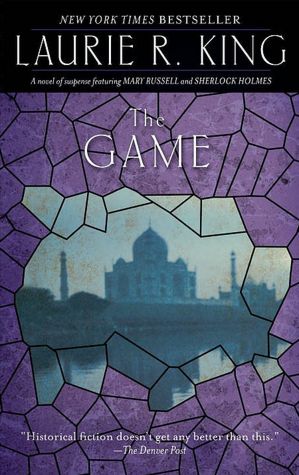
I'm skipping around a bit here with the chronology of my reviews, because I wanted to get all of my gushing out in one spot. These three books are all part of the same series. (Also, side note, aren't those covers just gorgeous? I love both styles so much.)

Have I mentioned Mary Russell here before? If I haven't, I apologize, as if you know me in real life and I've spoken to you at all in the past two years there's a 90% chance I've recommended the Mary Russell books to you in terms so strong that you probably backed away slowly, smiling and nodding and looking for something to defend yourself with in case my not-so-latent maniacal tendencies started manifesting themselves in a more sinister way than book recommendations.

Ahem. Mary Russell is one of my current favorite literary characters. Laurie R. King has created an absolutely fantastic series about this British-American Jewish feminist Oxford scholar in the 1910's and 1920's who, at the age of 15, meets up with a retired Sherlock Holmes and becomes his protegee and partner. The books are meticulously researched and just sparkle with wit and intelligence. King's Holmes is his own character but still true to the original vision of Conan Doyle (although this Holmes is rather testy about any references to Conan Doyle; he dislikes the way the latter man sullied his name by association, especially once Conan Doyle turned more to mysticism and fairy stories).

But Mary Russell, from whose viewpoint the stories are told, more than holds her own with Sherlock Holmes without becoming unrealistically superior to him. He still is able to teach and mentor her without making her appear weak. She is a worthy partner for him in every way, and challenges his mind and opinions more than he has been used to.

I've read three of these books this year. The Game is book 7. Later on in the year my book club read book 1, The Beekeeper's Apprentice, and I also read book 8, Locked Rooms.

18. The Game, by Laurie R. King
****

In The Game, Holmes and Russell make their way to India at the request of Mycroft Holmes in order to investigate the disappearance of an intelligence officer by the name of Kimball O'Hara, better known as the titular character of Rudyard Kipling's novel Kim. (One of the delightful things about the Holmes/Russell universe is that many purportedly fictional characters, such as Holmes himself, are actually real and pop up at interesting times.) I loved the atmosphere of this book, which felt simultaneously menacing and full of color and spices. There were a few unexpected but satisfying twists, along with a few threads of a mystery to be picked up in the next book. All in all a solid book and great fun to read, but not quite equal to the top books in the canon (books 5 and 6, O Jerusalem and Justice Hall, were two sides of the same coin and absolute masterpieces. They were two of the top three best books I read in 2011). Four stars.

28. The Beekeeper's Apprentice, by Laurie R. King
*****

It was delightful to re-read The Beekeeper's Apprentice a few weeks later with the benefit of hindsight (or is it foresight when you know what's coming in the next few books? Anyway, I enjoyed it, whatever it was) and seeing how later events in the series were foreshadowed as well as seeing the clues to the answer to the mystery as they popped up in the book. It re-confirmed my conviction that Laurie R. King is a master of storytelling, whose writing style is like weaving a huge epic tapestry: everything is connected, somehow, and all the disparate threads come together to make an astonishing whole. (Yes, I have a serious author crush going on here.) Five stars.

31. Locked Rooms, by Laurie R. King
*****

I went into Locked Rooms not expecting too much, as I'd heard that it was four shorter stories rather than one complete novel. I was delighted to find that I was mistaken. The book is divided into four parts, yes, but that's because two of the parts are actually told using third-person narration with Holmes himself serving as the viewpoint character for the first time in the series, with the other two parts in the accustomed first-person narration of Mary Russell. This may sound like it shouldn't work, but oh, believe me, it does, and is done for very good and sufficient reasons. Far from being disappointed in this book, the ultimate result took my breath away. It stands solidly with books 5 and 6 at the top of the series. This book sees Russell and Holmes arriving in San Francisco to tie up the affairs of Mary's parents' estate, and a mystery from her childhood rises up to confront them. I can't think of anything else to say that won't give away spoilers or just devolve into garbled author-crush gushing. But seriously. Wow. Five stars and mad applause for Laurie R. King. (And yes, this book is a serious contender for the final six-star best book of the year award.)

Seriously, if you haven't started reading this series, do yourself a favor and pick up The Beekeeper's Apprentice. You should read all of them in order so you can properly appreciate the sequence and build of events and facts, and all of them, even the weakest (looking at you, book 3), are solidly on the Books You'll Be Glad You Read list.

Thursday, November 1, 2012

Ellie's books 14-17


So. In the interest of catching up (really this time), I'm just going to post a few thumbnail-type reviews.


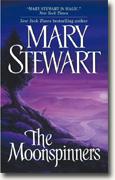
14. The Moonspinners, by Mary Stewart
****
I love this book, and re-read it every year around Easter time (yes, that's how far behind I am with my reviews) and then spend the next few months dreaming of Mediterranean holidays. This book chronicles the adventures of Nicola Ferris, a secretary at the British embassy in Athens, who takes an Easter holiday with her cousin in an out-of-the-way village in Crete. She promptly stumbles into a mystery involving a pair of brothers, kidnapping, thievery, boats, crab-pots and both attempted and accomplished murder. The action is great, but what I love best about this book is the feeling of place that the descriptions evoke. I can easily picture myself into the landscape and always come out of the book slightly bewildered and disappointed that I'm no longer sitting on a patio in the Greek sunshine sipping mint drinks. Four stars.


15. How We Decide, by Jonah Lehrer
***
This was another Kindle Daily Deal which I picked up on a whim because I thought, looking at the title, that it might help me with some of my less-decisive tendencies. In fact, in the author's note on this book, he explains that he decided to write it because he was tired of spending fifteen minutes in the cereal aisle trying to decide between Apple Cinnamon and Honey Nut Cheerios every time he went grocery shopping. However, this book isn't a how-to guide like you might expect, but more of a how-do guide to the brain and its inner workings. Lehrer opens each chapter with a fascinating story of a real-life situation in which a type of decision was made (such as the Mann Gulch fire, which Megan talked about in her review of Young Men and Fire), and then talks about what parts of the brain and which brain functions influenced, prevented, or made such a decision possible. Most of the time it was fascinating, although sometimes I admit I got bogged down in the super-scientific parts. But if you are interested in the ways the brain works and affects such things as panic, intuition, gambling, autism, serial killers, memory, addiction, etc., then you'll enjoy this book. The writing style is clear and coherent so that even the super-technical parts are understandable, and the storytelling parts are, quite simply, riveting. Unfortunately, though, it didn't help with my cereal selection process. Three stars.


16. Bridget Jones' Diary, by Helen Fielding
***
It had been several years since I'd read this, and flying out of my home state and hometown to move to a new city across the country called for something light-hearted. My Kindle offered me this. And it did what it needed to, in that I was distracted and diverted, but I was a bit disappointed to find out that I didn't enjoy it quite as much as the first time I'd read it. Maybe it's that I've gotten older and don't have the patience for as much juvenile-type behavior as Bridget engages in. I don't know. Despite my impatience with some of her antics, though, Bridget did manage to get in a few great lines, for which I must give her (and Fielding) due credit. My favorite lines this time around (in no particular order):
On the end of a relationship:
It's no good. When someone leaves you, apart from missing them, apart from the fact that the whole little world you've created together collapses, and that everything you see or do reminds you of them, the worst is the thought that they tried you out and, in the end, the whole sum of parts adds up to you got stamped REJECT by the one you love. How can you not be left with the personal confidence of a passed-over British Rail sandwich?
On trying to set the VCR record function:
Feel exactly the same as feel when trying to follow signposts on roads. Know in heart that signposts and video manual do not make sense but still cannot believe authorities would be so cruel as to deliberately dupe us all. Feel incompetent fool and as if everyone else in world understands something which is being kept from me.
And of, course, the classic:
It struck me as pretty ridiculous to be called Mr Darcy and to stand on your own looking snooty at a party. It's like being called Heathcliff and insisting on spending the entire evening in the garden, shouting "Cathy" and banging your head against a tree.
All in all, a fun read. Three stars.


17. The 39 Steps, by John Buchan
****
In the interest of full disclosure, I "read" this in audiobook format, which I still think totally counts, while pushing a napping toddler around the apartment complex. This book follows expatriate Scot Richard Hannay, who has recently returned to London from southern Africa and is about to die of boredom. He has determined to leave the country again when he is approached by a stranger claiming to hold information vital to the security of the nation, and who pleads for Hannay's assistance in hiding him until he can contact the proper people. Hannay puts him up for the night but ignores the wilder flights of his guest's tales of political plotting. However, when his guest is murdered, leaving Hannay his notebook, Hannay finds that he must not only believe the wild tales of his guest, but must also dodge both the British police (who suspect him of being the murderer) and a formidable force of foreign spies bent on silencing Hannay before he can thwart their nefarious plans.

Bottom line: great book. Lots of action, lots of intrigue, lots of close calls and lots of fun. I'd seen several film adaptations of this story so was excited to get the chance to discover the original. I think the original is of course the best, but was surprised by just how many universal elements from the adaptations were missing from the original book. For example, I kept waiting and waiting for the beautiful woman to appear so they would be forced to run across Scotland handcuffed together and outwitting dangerous spies and . . . nothing. No woman at all other than one or two throwaway characters like farmers' wives and the like.

I was pleased to find, however, that the resourcefulness, daring and general awesomeness that characterize the Richard Hannay of the adaptations were all there and more. Definitely a character you enjoy spending time with, and certainly one you'd want to have on your side in a pinch. Four stars.

I loved the version I listened to (done by BJ Harrison of The Classic Tales Podcast). I highly recommend checking out his podcasts and audiobooks if you haven't yet done so.

Tuesday, October 16, 2012

The Prisoner of Heaven-- #35

The Prisoner of Heaven (TPOH) is the third (and I believe final) installment in the story that started with The Shadow of the Wind (TSOTW), by Carlos Ruiz Zafon, which I reviewed earlier this year. TSOTW was followed by The Angel's Game (TAG), reviewed here.

TPOH is much shorter than the first two books. It mainly focuses on revealing the history of one of the main characters of TSOTW, Fermin Romero de Torres. Fermin's sordid history is only hinted at in TSOTW, so it was really nice to finally know more about what made him such an intriguing character. Fermin is also intertwined with Isabella, a main character from TAG, so this installment helps round out what we know about her, as well. And of course, The Cemetery of Forgotten Books makes an appearance, although it is not until the very end.

This book was a pleasant and engaging read. I'd put it probably close to the level of TAG, and give it a good 3.5 stars. TSOTW set the bar so high that pretty much nothing else Zafon writes is going to compare, but I'm glad he went ahead and added the two subsequent books. Reading this one reminded me how much I want to go back and re-read TSOTW.

I wasn't particularly ecstatic about how Zafon chose to end this story in the epilogue. The end of the book itself seemed to hint that all was well with everyone, a nice resolution. It wasn't sugar-coated or unrealistic, it had just wrapped things up pretty darn well. But then the epilogue came along and strongly hinted that more adventures in violence and revenge were ahead. I don't necessarily think that Zafon is going to write more to the story; I just think for some reason he wanted to leave it on that note. Which I could have done without.

Anyway, I stand by my recommendation last time-- if you read any of the books, read The Shadow of the Wind. If you love it as much as I did, you'll probably seek out and read the next two. That is all.

What are all of you reading? Anything? Anyone?

Tuesday, August 7, 2012

Book 29: The Angel's Game

I have fallen behind on my reading, mostly due to falling asleep every five minutes. With a slight increase in energy this past week, I dove into The Angel's Game and finished it fairly quickly. It is nice to have another book done, though if I were on schedule I'd be in the middle of my 31st book right now.

TAG is a sort of prequel to The Shadow of the Wind, which was my tenth read of 2012 and which I reviewed here. I say it's a sort of prequel because, while you go into it knowing that it is connected to the first book, you don't exactly understand the full connection until the end, and even then the connection isn't as deep as in most prequels. I'll just say that some of the characters are the same, and The Cemetery of Forgotten Books, which was introduced in TSOTW, plays a role in TAG, as well.

TAG uses the same setting as TSOTW, a dark and sometimes mystical Barcelona. The way Zafon describes the city is at times breathtaking and/or frightening. (And it must be said again, the woman who translates his work really does a phenomenal job.)

At the center of the book is a man named David Martin, a writer of penny dreadfuls who longs to write something truly meaningful. When an opportunity comes along to do just that, David takes it, unknowingly entering into way more than he bargained for. Soon drawn into a decades old mystery, David can't rest until he knows the truth. Zafon unfolds a mystery within a mystery again in this book, taking the reader on quite the ride. There are many surprises along the way-- I definitely didn't see the end coming.

I gave TSOTW five stars and I wouldn't change that rating now. TAG, however, didn't leave quite the same impression on me. It's definitely enjoyable, but it's a much darker book, which I wasn't expecting. Towards the end of it, it seems like every chapter ends with a death-- and these aren't gruesome, gory detailed deaths, which I appreciated, but man, the body count is high.

Additionally, Zafon introduces a few little things into the story that never fully get resolved, in my opinion. They aren't major plot elements that leave the reader feeling confused, but there are a few questions I would have liked answered.

My rating for this book has to fall somewhere around a 3.8. I can't give it a full four stars-- I just don't think it quite makes it. But it's not a three star read either. Can you tell I am conflicted?

There is a third installment to this sort of series called Prisoner of Heaven that I am very excited to read. I have heard great things about it.

One recommendation-- even though this book is sort of a prequel, if you are at all interested in reading anything by Zafon, please start with The Shadow of the Wind. It is a fabulous introduction to Zafon, his beautiful, gothic Barcelona, and The Cemetery of Forgotten Books. If you enjoy that one, definitely read this one next. If not, you won't be missing out by skipping this one altogether.

Friday, May 4, 2012

Ellie's Book #8: The Woman in White


The Woman in White, by Wilkie Collins
****


This was a re-read for my book club, but it's a book I love. The first time I read this book, I was reading it online on Project Gutenberg during my breaks at work. My husband and I were getting ready to move around this same time, and the move date (when we'd be without internet for a couple of days) coincided with my reaching the part where Things Start to Get Really Good. I was also going to be taking a couple of days off work for both the move and my little sister's wedding (yeah, I know, we have *great* timing), and I could not bear the thought of waiting that long to find out what happened, so I ended up taking time out from packing to run to three bookstores to find a copy because the first two were out. 

And I'm glad I did. I think this was my fifth read of this book (yeah, I re-read a lot. I'll discuss that in another post sometime) and the first time reading it with the specific plan of discussing it with other people, so it was fun to see what themes I picked up on this time that I had missed before or forgotten about. 

This book is an early mystery novel of sorts, involving a strange woman in white, two half-sisters, a drawing teacher, a brutish baronet, an invalid uncle, assorted old ladies and a sinister count. Add mistaken identities, lunatic asylums, trained white mice, kidnapping, doomed love, sea voyages, attempted murder, arson, forgery, slander, scandal, and opera-loving Italians of all shapes and sizes to the mix and you have the makings of 400-ish pages of a whole lot of fun.

What can I say? I can't really sum up the plot of this book succinctly, partly because Collins is anything but succinct. It's told as a series of first-person narratives, ostensibly so that no part of the story is given second- or third-hand; each part of the story is related by an individual who was actually there to see it or take part. This is great but it means that when Walter is telling the story we have to listen to a lot of extraneous matter about how wonderful and beautiful and perfect Laura is, and when Marian is telling the story we have to listen to a lot of (unconvincing) regrets about how she can't do anything to save them because she is only a weak woman.

Let me take a break here to say the lady doth protest too much. Wilkie Collins, in Marian Halcombe, appears to have created a character he didn't quite know what to do with or how to control. She's smart, she's sassy, she's resourceful, she's basically awesome, but he needed Walter to be in love with Laura instead, you know, for plot reasons, so it feels like he had to keep artificially hobbling Marian to keep her from becoming the main love interest. To do this he specifies that she is ugly (yes, he even goes so far as to give her a bit of a mustache) and keeps having her remind us all that she is only a woman, and what can women do? A heck of a lot, Marian, as you keep showing at every turn. Seriously, Laura's great and all, but you're the heroine of this story in my book and only the VILLAIN has the sense to see it. Yeah, you read that right, the hero is in love with bland and actually-helpless and feminine to the core Laura, while the villain has the good sense to fall madly in love with spunky Marian.  (Actually, in the not-really-faithful-at-all 1930's movie adaptation, the filmmakers DID make Marian the main love interest, kind of the same way that people can't help but tinker with Fanny Price. This was possible because in the movie Marian did not have a mustache.) 

Wilkie, your character was too good for you, and I hope you realize it. (I think you do, because you do have Walter, in his brief pauses between rhapsodizing on Laura's perfections, mention how amazing a person and what a staunch ally and good friend Marian is. And hey, she's the one he takes into his confidence when plotting! Seriously, the only thing keeping this woman from taking over the show is that tacked-on mustache. In my mind I see it kind of like a Mr. Potato Head accessory; just shoved on there as an afterthought once the author realized that he'd painted himself into the corner where his reader was naturally going to be rooting for the hero to get with the wrong girl.)

But even with these flaws, I still really enjoy this book. It's long; it's an investment and fun to curl up with knowing that you'll be taking a long journey together. And the good news is that (other than the aforementioned rhapsodizing and self-deprecation from our respective main characters), there isn't much wasted space (okay, okay, so a few of the landscape descriptions could also have been dropped). What I mean is, all the PLOT elements come back together; even what seem like throw-away bits end up being important to the story later. 

If you can get past some Victorian stereotypes, can tolerate unnecessary facial hair, and like fun mystery-type stories, I recommend The Woman in White. It's worth it, I promise. (Seriously. Just wait till you meet Fosco. He must be seen to be believed.) Four stars.

Monday, March 5, 2012

The Shadow of the Wind

I have been trying to come up with the perfect description or opening line for my review of this book, my tenth read of 2012, and I just can't do it justice.

This book swallowed me up. It enveloped me. I was so drawn into the story, I couldn't wait to find out how everything would come together in the end. Zafon's writing is phenomenal. This book made me wish I knew Spanish only so I could read the original writing-- but with as amazing as it is in English, the translator must have done a fantastic job, as well.

The story is set in post-Spanish Civil War Barcelona. A young man named Daniel is invited into the Cemetery of Forgotten Books, little knowing that a choice he makes there will alter the rest of his life and many others'. In Zafon's Barcelona, the Cemetery of Forgotten Books is a huge, ancient library, full of forgotten books lovingly preserved by a group of the city's booksellers and book lovers. Its very existence is a well-kept secret, and few are ever invited in. According to tradition, invitees are allowed to select one book to take home, and that they must protect for life. Daniel feels drawn to a volume by a man named Julian Carax called The Shadow of the Wind. After becoming completely engrossed in his reading of the novel, Daniel sets out to find Carax's other works, and discovers that they are very rare, indeed. In fact, a mysterious figure is hell bent on destroying by fire every last copy of every book Carax wrote.

Thus begins an adventure bigger than anything Daniel could imagine as he works to uncover the truth behind Carax, his books, and the person bent on their destruction. He will end up drawn into a web of lies and deceit, true friendship and loyalty, forbidden and unrequited love, anger, forgiveness, revenge, redemption, abuse, passion, murder, and mistaken identity, among other things. This book is a story within a story. Just when you think you have it figured out, it takes another crazy turn. At times, it could have easily crashed and burned, but Zafon is just that good.

Along the way, Daniel befriends a former intelligence officer turned beggar, Fermin Romero de Torres, who provides most of the humor in the book through his ridiculously funny dialog. I am not joking when I tell you he made me burst out laughing on multiple occasions. Aside from the insane story line and the incredible command of language exhibited by Zafon, de Torres is one of the best parts of the book. He is just hilarious.

Carlos Ruiz Zafon wrote this book (in Spanish) in 2001, and it was translated into English in 2004.  This is yet another book about books-- and I am quickly beginning to realize how much I love that plot choice. Something about it... when it's done well, it's so wonderful.

I give this book five stars. One of the highest compliments I can give a book is the desire to re-read it, and I definitely want to re-read this one, preferably my own copy next time. Be forewarned, there is some language, some violence, and some sex. Nothing gratuitous, nothing too graphic, nothing that turned me off of the book.

Since so many others have said it so much better than me, here's a smattering of what the critics have had to say about this book:

"If you thought the true gothic novel died with the nineteenth century, this will change your mind. [The Shadow of the Wind] is the real deal, a novel full of cheesy splendor and creaking trapdoors, a novel where even the subplots have subplots . . . This is one gorgeous read." -- Stephen King

"The Shadow of the Wind is a dazzling novel about the power that one book can exert over the right reader, a remarkable debut from a young Spanish writer . . . [It] is one of those lovely books, like A.S. Byatt's Possession, that celebrates the strong bond between reader and book, while showing us how elusive the truth of literature can be." -- The Times-Picayune

"Part detective story, part boy's adventure, part romance, fantasy, and gothic horror, the intricate plot is urged on by extravagant foreshadowing and nail-nibbling tension. This is rich, lavish storytelling..." -- Booklist

"The plot is labyrinthine, the characters and coincidences Dickensian, the whole echoing with literary flourishes and references. It's a bit like A.S. Byatt's Possession and Arturo Perez-Reverte's The Club Dumas, with touches of Jorge Luis Borges, Umberto Eco, Ross King, Charles Palliser, and Gabriel Garcia Marquez. Bibliophiles will feast on its riches." -- Orlando Sentinel

Entertainment Weekly described the book as "wondrous," noting that "[t]here are places in which the book might seem a little over-the-top (doomed love, gruesome murders) but for Zafon's masterful, meticulous plotting and extraordinary control over language."

Read it!

Monday, January 16, 2012

The Thirteenth Tale-- and my third read

Title: The Thirteenth Tale
Author: Diane Setterfield
Published: 2006
406 pages
Meg's rating: 5 stars


I loved this book.


Just had to get that out of the way.

The Thirteenth Tale is awesome. It is a mystery and a ghost story. It is about books and book lovers. It features writers and storytellers, siblings and twins, forbidden affairs and unnatural passions, a larger-than-life dessert caterer, a reclusive bestselling author, a destructive house fire, and loss, heartbreak, and reunion. Among other things.

Diane Setterfield hit one out of the park with this book. I was drawn in almost immediately-- and though I thought I liked it at the beginning, I liked it more and more with every chapter I read. Though I read this book concurrently with another one (which I shall be reviewing shortly) it was this book that stayed on my mind all the time-- this book that I couldn't wait to get back to every day.

The main character and narrator of this book is Margaret Lea, the daughter of a loving, book-shop-owning father and a mostly absent, ever grieving, depressed mother. Margaret dabbles in autobiographical writing when she is not helping her father out at the shop and so is only mostly shocked when she receives a letter from one of the most prolific authors of the day, Vida Winter, who wants Margaret to write her biography. Ms. Winter has written numerous bestsellers, but has managed to keep her personal life a tightly-held secret. Though reporter after reporter has come to call, Ms. Winter gets her thrills by answering their questions with complete fabrications. She is a master storyteller.

Margaret decides to accept Ms. Winter's request, and what follows is an enchanting, gripping, enthralling tale. To say it was mesmerizing is not an exaggeration. And I will leave it there, because I don't want to risk spoiling anything. Suffice it to say, I highly recommend this book. I give it five stars because, not only did I love it, I can't wait for some time to pass so I can read it again. I would absolutely LOVE to see a film adaptation, and will not be at all surprised if I do at some point.

From the back of the book:

"Reclusive author Vida Winter, famous for her collection of twelve enchanting stories, has spent the past six decades penning a series of alternate lives for herself. Now old and ailing, she is ready to reveal the truth about her extraordinary existence and the violent and tragic past she has kept secret for so long. Calling on Margaret Lea, a young biographer troubled by her own painful history, Vida disinters the life she meant to bury for good. Margaret is mesmerized by the author's tale of gothic strangeness-- featuring the beautiful and willful Isabelle, the feral twins Adeline and Emmeline, a ghost, a governess, a topiary garden and a devastating fire. Together, Margaret and Vida confront the ghosts that have haunted them while becoming, finally, transformed by the truth themselves."

Sunday, January 15, 2012

Book #3: The Game, Book 7 in the Mary Russell series


I also read Miss Pettigrew, but have no need to rehash Ellie's thoughtful review of a lovely little book. Pettigrew was my second book of the year, and I've decided to track how many I read simply because I never have before. It'll be interesting to see the body count after the year's up.

Speaking of Ellie, she also got me turned onto the Mary Russell series by Laurie R. King. I've been burning through them, and they are delightful.

Truthfully, I don't usually read mystery series because they can become a bit wan and kitschy. (The fact that I read a lot of the Cat Who series when I was younger may have something to do with this jaded view of mystery novels.) I like this series even more as I go along, which is refreshing.

For a bit of background, the character Mary Russell is a half-Brit, half-American, Jewish feminist orphan. Yeah, I know. But it works. It works marvelously. In the first book of the series, The Beekeeper's Apprentice, 15-year-old Mary encounters the semi-retired Sherlock Holmes who keeps bees in Sussex. They become nearly instant friends, and eventually Mary becomes his apprentice (ergo the title). Their adventures together land them in all sorts of troubles both in solving crimes and as instruments of the political machinations of Mycroft, Sherlock's older brother.

The writing is excellent, and entirely told from the first-person perspective of Mary Russell herself. Although the author is the first to emphasize that these are Mary Russell books not Sherlock Holmes books, they are one of the better bits of derivative literature I've chanced to stumble upon over the years. Ms. King is very thorough with her research and is true to the essence of the world established by Sir Arthur Conan Doyle, while making the character of Mary her own.

Unfortunately, to delve much more into the background of the books would be to deny potential readers the pleasures of discovering the world of Mary Russell and Sherlock Holmes themselves.

In The Game, Russell and Holmes find themselves in India of all places. (This is far from the only random exotic locale the pair finds themselves.) It's a lush and lustrous romp, full of interesting characters and part of the plot dependent on characters from Rudyard Kipling's Kim. Disguises, deceit, dangerous beasts, and political intrigue in a time of political unrest in the British-occupied country weave through the novel. I hesitate to give too much away, as this is the next book in the series for Ellie and I don't want to ruin it for her.

I liked it a lot. It's not my favorite of the Mary Russell books I've read so far, but that's largely because of how much I loved the two companion books in the series, O Jerusalem and Justice Hall. My appreciation of the book may have been enhanced if I was at all familiar with the book Kim, though I think Laurie King does an adequate job explaining the connections for someone unacquainted with the book or the character.

A solid offering in the series. I've yet to finish one of the books and not be curious what happens in the next one. And I'm especially glad that there are still quite a few more books to dive into, so expect more reviews from this series as the year progresses.

I'm giving this four stars. It was a fun and pleasurable read as the Mary Russell books always are. Definitely give The Beekeeper's Apprentice a chance if this piqued your interest at all.

Just the facts, ma'am
Author: Laurie R. King
Published: 2005
Rating: 4 stars